Elaine’s book
Knowledge that extends beyond the conference room.
Fifty Excuses (Not) to Do Bulletproof Estate Planning explains why planning early matters and how a thoughtful plan protects freedom, security and peace of mind.

Estate planning, trusts and probate with Elaine Andrews, a California Certified Specialist. Personal guidance for what matters most.
Elaine Andrews began her estate planning practice in 1992 and founded The Andrews Law Firm two years later. Since moving the practice to Truckee in 2010, she has served families across Tahoe, the Central Valley, the Bay Area and greater Northern California.
Her approach to “Bulletproof Estate Planning” grew from seeing how a wrongful conservatorship could drain a person’s independence and estate. That experience shaped a practice focused on clear documents, careful coordination and personal guidance. She is a State Bar of California Certified Specialist in Estate Planning, Trust and Probate Law, a California credentialed professional fiduciary, and a retired Lieutenant Colonel of the U.S. Army Reserve JAG Corps.
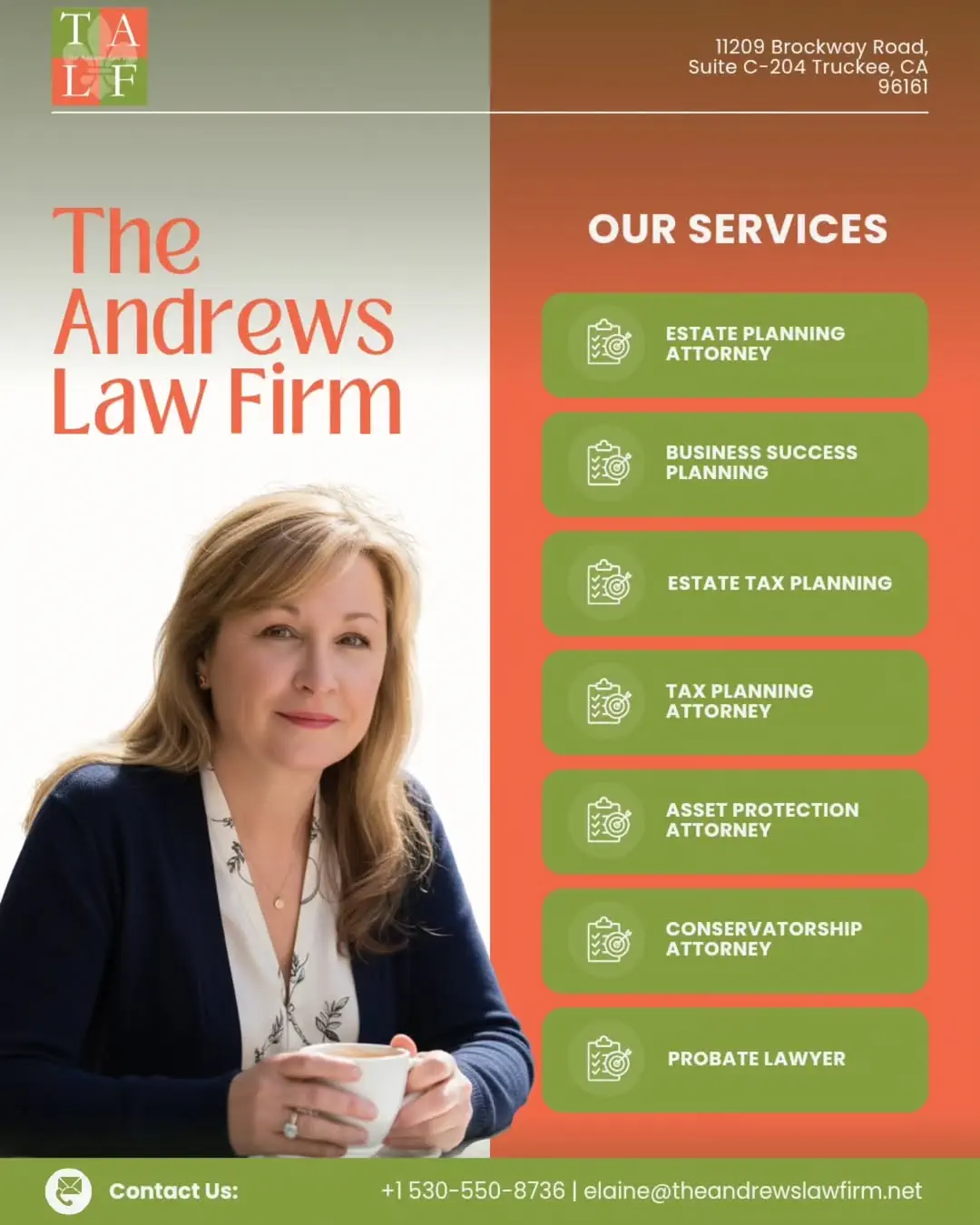
From building a living trust to administering an estate, every service supports the same goal: protecting the people, property and decisions that matter to you.

A trust, a pour-over will, powers of attorney and a health care directive, drafted to work together and titled to match.
Explore service ↗
Plan ownership and leadership transitions so the company keeps running when you step back, become ill or pass away.
Explore service ↗
Coordinate your plan with the federal estate tax, capital gains and Proposition 19 so more passes to the next generation.
Explore service ↗Keep your home and accounts out of probate and under your control while you’re able.
Guide trustees through notices, inventory, taxes and distribution after a death or incapacity.
Court-supervised administration for estates left outside a trust, step by step.
Simplified procedures for qualifying California estates.
Protective options when an adult can no longer manage personal or financial decisions.
Structures that help preserve family wealth from avoidable exposure.
Tax-aware decisions on gifts, sales and the step-up in basis.
You don’t need to have every answer before you begin. Start with a conversation, then move forward one clear step at a time.
Consultation
Share your goals, family situation and questions with Elaine. Your free initial consultation is the starting point for understanding what you need.
Planning
Talk through the options for your family, property and wishes. Understand the approach and the documents involved before deciding how to move forward.
Next steps
Put the agreed plan into action with clear next steps. Know which documents to complete, what to keep and what to discuss as your circumstances change.
Let’s start with what matters to you.
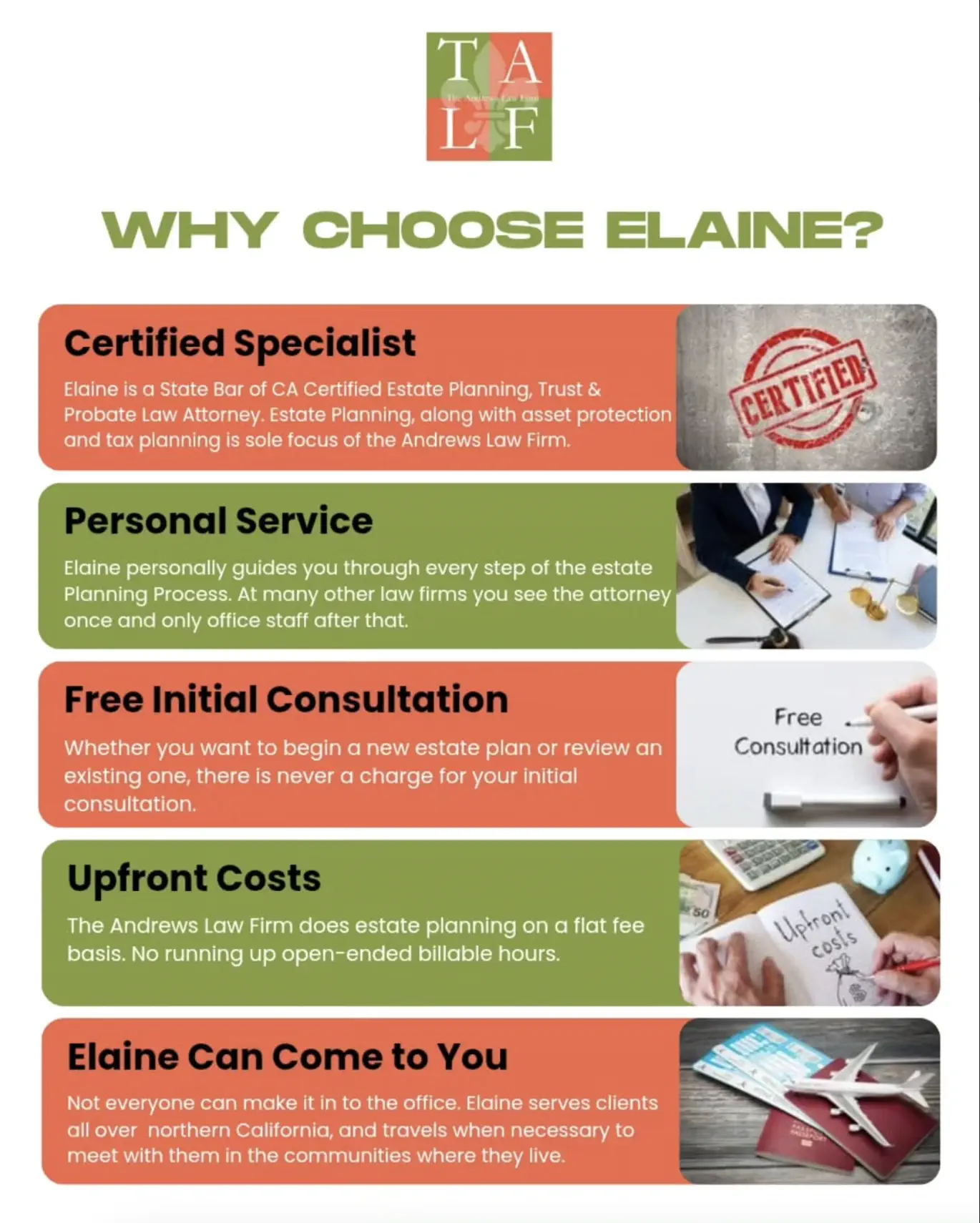
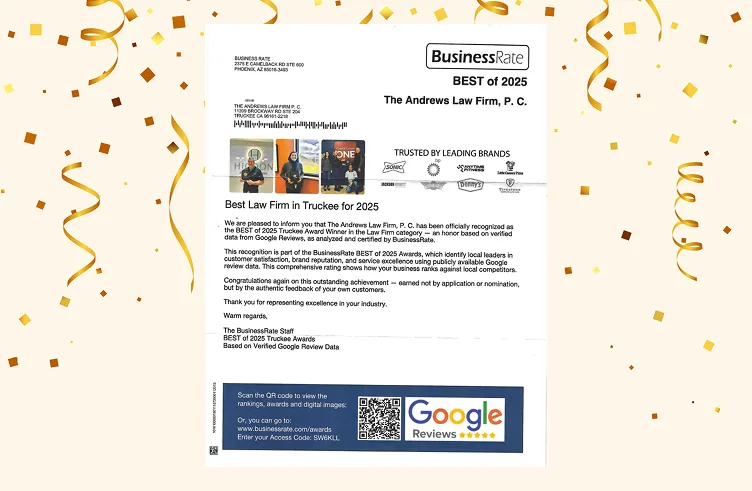
Book a Free Consultation ↗Recognized by BusinessRate®, based on verified Google review data and consistent client satisfaction.
From Elaine’s book. Each line gets crossed out as you read, because California law answers every one of them.
I’m too young.
Accidents don’t check age. Without a power of attorney, your family may need a court to act for you.
My estate is too small.
California’s small-estate limit is $208,850. One home in Truckee is over it.
I already have a will.
A will still goes through probate. A funded living trust doesn’t.
My kids will work it out.
Without instructions, a judge decides who manages your estate.
We did a trust years ago.
Anything not titled to the trust can still end up in probate.
Conservatorship happens to other people.
A client’s wrongful conservatorship is the case that started Elaine’s approach.

Not every asset belongs in a trust. See where California planning requires a different approach.

How 529 plans, gifting rules and California tax treatment intersect with an estate plan.

Why a funding mistake does not always mean a California home must go through full probate.
Hear directly from clients about their experience working with Elaine Andrews.
Questions about working with the firm? Start here, then bring your own circumstances to a conversation.
See all questionsA will is a signed document that says who receives your property, who serves as executor, and, if you have minor children, who you nominate as their guardian. In California a will must be signed by you and two witnesses, or written and signed entirely in your own handwriting, which is called a holographic will.A will takes effect only at death. On its own it does not avoid probate; it tells the probate court what to do.
Almost everyone who owns property or has children should have one. Even with a living trust you still need a pour-over will, to catch any asset left outside the trust and to nominate guardians for minor children.
California’s intestate succession rules decide who inherits. Your share of community property generally goes to your surviving spouse; separate property is divided between the spouse and your children, parents or siblings, depending on who survives you. A judge appoints an administrator, and if the estate is above the small-estate limit it goes through probate.
When you first own property, marry, have a child, or turn 18. At 18 your parents lose the legal authority to make medical or financial decisions for you without a power of attorney, a health care directive or a court order, so even a college student benefits from the basic documents.
After a marriage, divorce, birth or death in the family; a move into or out of California; buying, selling or refinancing real estate; a large change in what you own; or a change in tax law. Even with no event, a review every three to five years catches accounts that were never titled to the trust.
Online forms can produce documents. They can’t confirm that your deeds, accounts and beneficiary designations actually match those documents, or that the plan holds up under California’s community property rules and Proposition 19. Elaine has been certified by the State Bar as a specialist in exactly this area, and she reviews how every asset is titled, not just what the documents say.
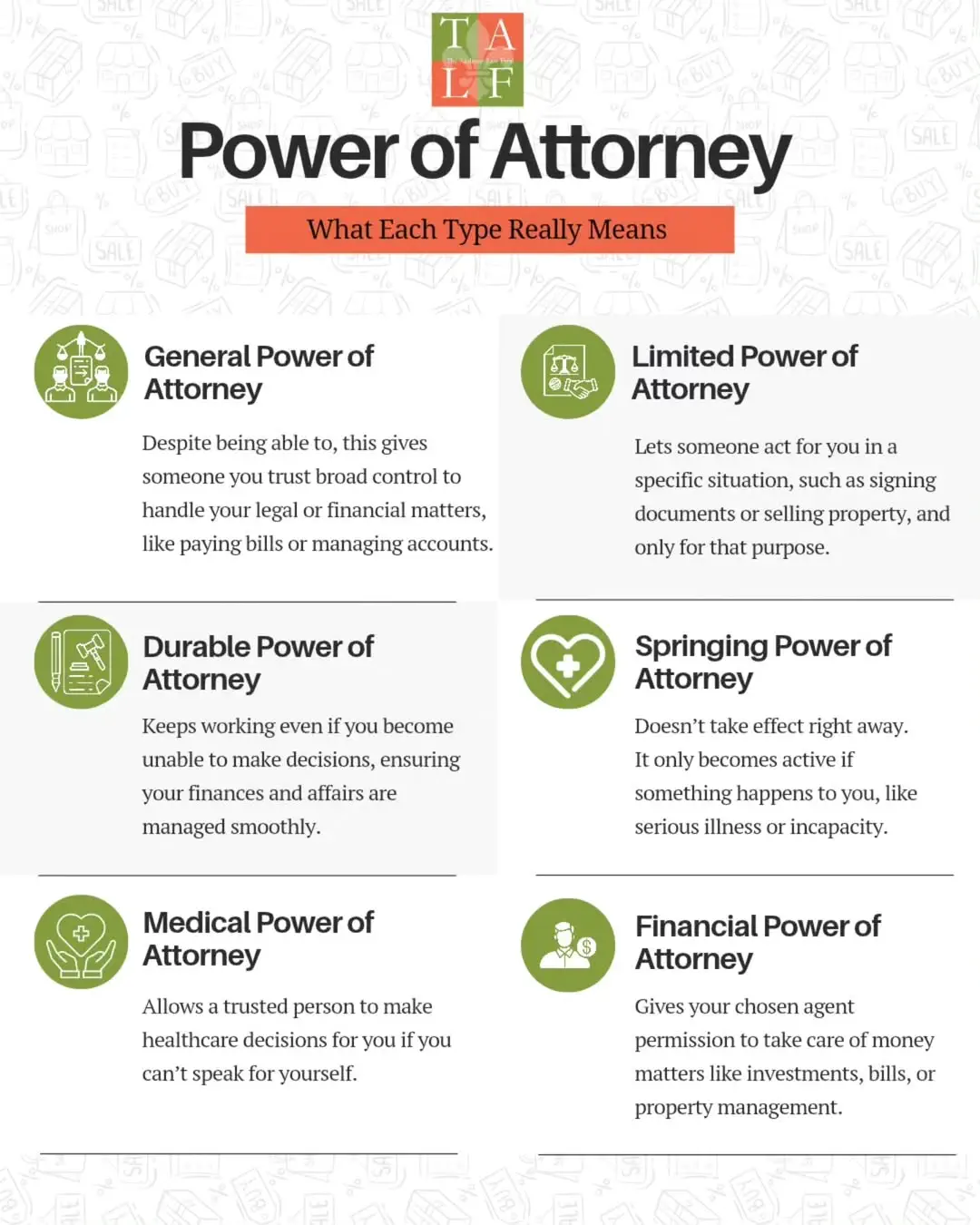
A durable power of attorney is a document in which you name an agent to handle your financial and legal affairs. Durable means it stays in effect if you become incapacitated, which is when it matters most. Without one, your family may need a court conservatorship to act for you.
During an illness, a hospital stay, dementia or extended travel; when someone has to deal with banks, the IRS, retirement accounts or real estate that isn’t held in a trust; and when assets need to be moved into your trust after you can no longer sign.
It is California’s document for naming a health care agent and recording your wishes about treatment, life support, organ donation and end-of-life care; the statutory form is in Probate Code §4701. It lets the person you choose speak with doctors and make decisions when you can’t.
An irrevocable life insurance trust, or ILIT, owns a life insurance policy so that the death benefit isn’t counted in your taxable estate and can be managed for your beneficiaries under terms you set. It is used mainly in larger estates and in blended families.
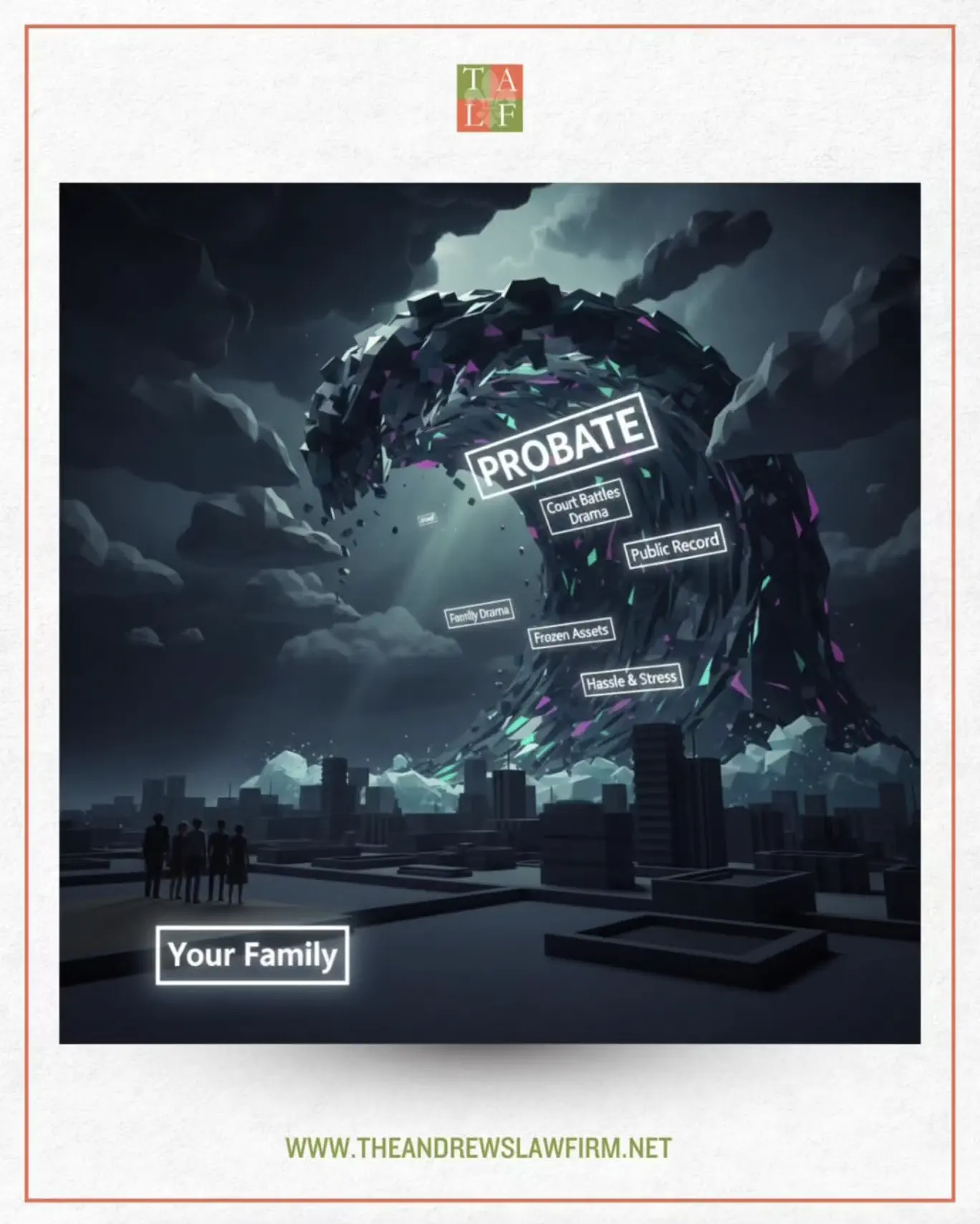
Probate is the court process for proving a will, paying debts and transferring the property of someone who has died. In California it often takes a year or longer, the filings are public, and the attorney’s and executor’s fees are set by statute.Assets avoid probate when they are held in a funded living trust, owned jointly with right of survivorship, or pass by beneficiary designation, as retirement accounts, life insurance and payable-on-death or transfer-on-death accounts do.
You sign a trust agreement and transfer your home and accounts to yourself as trustee. You keep full control and can change or revoke the trust at any time. If you become incapacitated, your successor trustee steps in without a court. When you die, the successor trustee distributes the assets privately, following your instructions.
A short will that works alongside a living trust. It directs any asset left outside the trust at your death into the trust, so everything is ultimately distributed under the trust’s terms. Assets that pour over may still need probate, which is why funding the trust during your lifetime matters.
A list of your assets with approximate values and how each is titled: deeds, recent bank, brokerage and retirement statements, life insurance policies and business documents. Bring any existing wills or trusts, prenuptial or divorce agreements, and the names and contact details of the people you want as trustees, agents, guardians and beneficiaries.
Yes. With a revocable living trust you are usually the trustee and the beneficiary during your lifetime. You can buy, sell, refinance and spend exactly as before, and you can amend or revoke the trust at any time.
The State Bar of California’s Board of Legal Specialization certifies attorneys in specific fields. To be certified in estate planning, trust and probate law, an attorney must show substantial experience in the field, pass a written examination, receive favorable evaluations from other attorneys and judges, and complete continuing education in the specialty. Elaine Andrews holds that certification.
Yes. The office is at 10270 Donner Pass Road in Truckee, and Elaine works with families throughout Northern California, including Tahoe City, Homewood and the rest of the Lake Tahoe basin, the Sierra Nevada, the Central Valley and the San Francisco Bay Area.
Yes. Call 530-550-8736, email [email protected], or visit our contact page. Please don’t include confidential details in a first message; contacting the firm doesn’t by itself create an attorney–client relationship.
Whether you are starting an estate plan, updating a trust or administering a loved one’s estate, begin with a clear conversation about your options. The first consultation is free.