
Personal estate planning counsel in Northern California
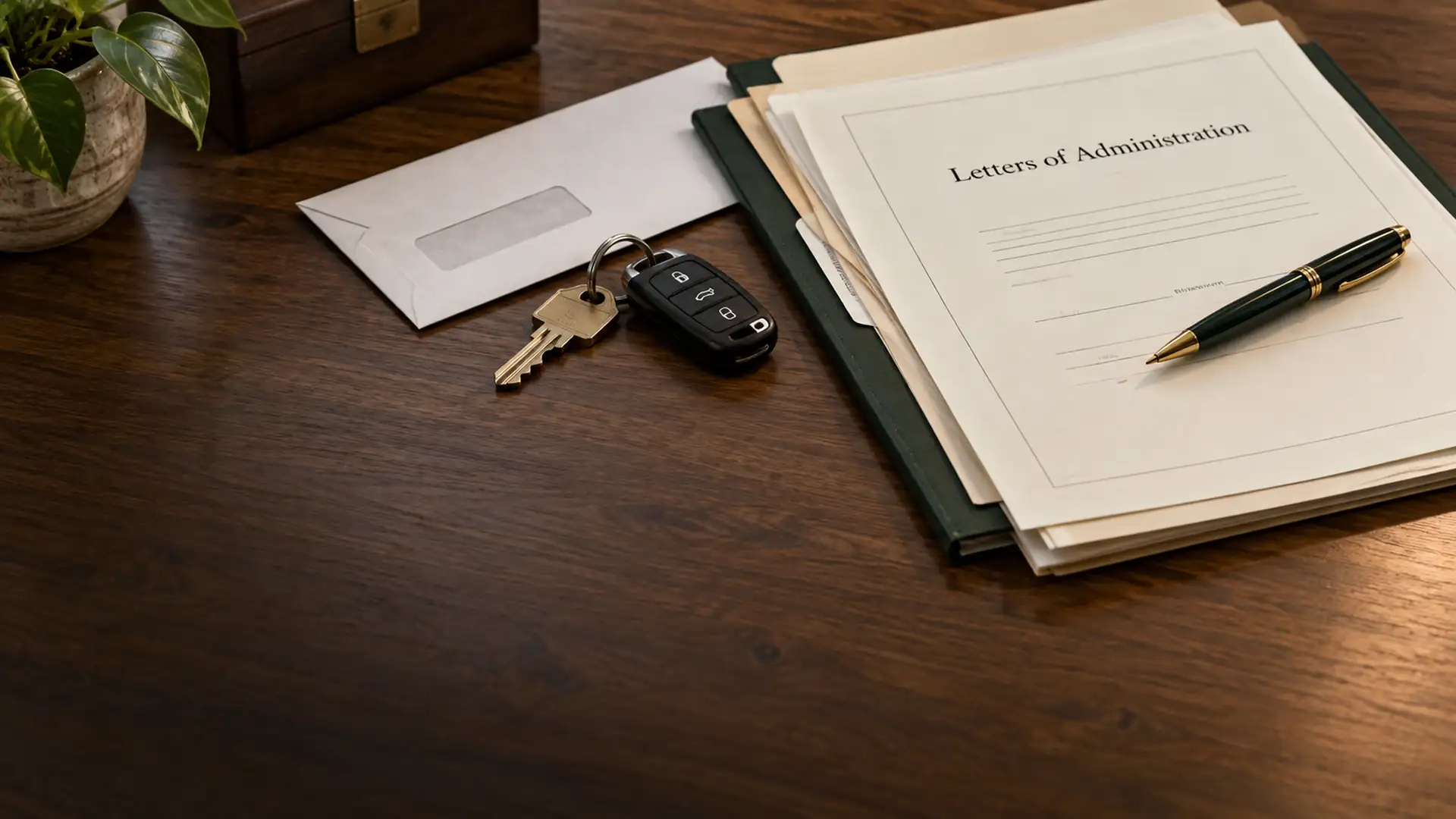
A car key, a bank envelope and documents on a wooden table

Practice area · Small Estates

Small Estate Administration in California

When an estate is small enough, California lets families collect and transfer property without a full probate — as long as they follow the rules exactly.

Counsel
Elaine Andrews, Certified Specialist
Service area
Northern California · Office in Truckee
First meeting
Free initial consultation

In plain terms

Small estate administration is the set of simplified California procedures for transferring a decedent’s property without a full probate when the property subject to probate is below the statutory limit — $208,850 in gross value for deaths on or after April 1, 2025 (Probate Code §13100). Depending on the asset, the transfer uses a sworn declaration, a short court petition or a recorded affidavit for real property. The limit is adjusted every three years (§890).

A shorter path, with its own rules

The small-estate procedures are faster and less expensive than probate, but they shift responsibility to the person who collects the property: that person can be personally liable to creditors and to other heirs for what they receive (Probate Code §13109–13112). Choosing the right procedure for each asset — and confirming that the estate qualifies in the first place — is where most of the work lies. The Andrews Law Firm, P.C. helps families in Truckee, Lake Tahoe and the Northern Sierra decide whether a small-estate procedure fits and complete it correctly.

  1. 01 Qualifying Does the estate qualify? · Collecting personal property by declaration · Real property: three different routes
  2. 02 Special cases Property passing to a surviving spouse · Vehicles, wages and other special assets · Responsibilities of the person who collects
  3. 03 Limits and next steps When the small-estate route is a poor fit · Medi-Cal estate recovery · Planning so the next estate is simpler
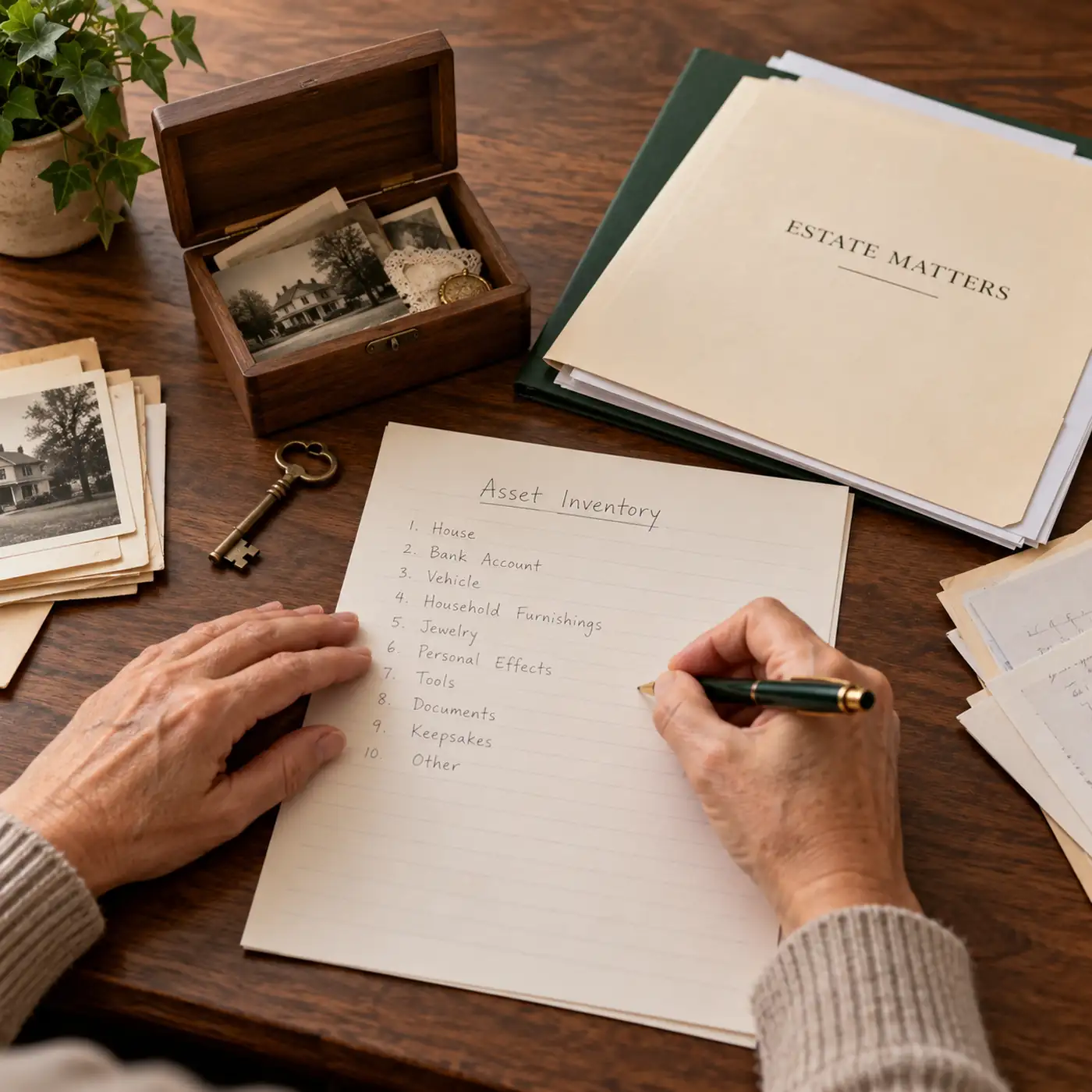
A car key, a bank envelope and a few documents on a table

Chapter 01

Qualifying

What counts toward the $208,850 limit, how personal property is collected by declaration and the three routes for real estate.

Does the estate qualify?

Count only the property that would otherwise require probate. These are excluded from the $208,850 limit (Probate Code §13050):

  • Property held in a living trust.
  • Property held in joint tenancy, or that passes to a surviving spouse or registered domestic partner.
  • Accounts and policies with a living payable-on-death or named beneficiary, including retirement accounts and life insurance.
  • Vehicles, vessels and manufactured homes registered with the DMV or the Department of Housing and Community Development.
  • Certain amounts owed to the decedent, such as unpaid salary up to a statutory amount.

Collecting personal property by declaration

At least 40 days after the death, the person entitled to the property — a beneficiary under the will, or an heir if there is no will — can present a declaration under Probate Code §13100–13101 to a bank, brokerage firm or other holder, with a certified copy of the death certificate. Once the requirements are met, the holder must release the property (§13105). No court filing is involved, but the declarant states under penalty of perjury that the estate qualifies and that no probate is pending.

Real property: three different routes

Real estate cannot be collected with the personal property declaration. Depending on value and timing:

  • Petition to determine succession (Probate Code §13150–13152) — a short court petition, available when the estate is within the small-estate limit, filed at least 40 days after the death.
  • Primary residence worth up to $750,000 — for deaths on or after April 1, 2025, a petition to determine succession can transfer the decedent’s primary residence to heirs or beneficiaries even when the home alone exceeds the general limit (§13151).
  • Affidavit for real property of small value (§13200) — for real property below a much lower threshold, filed with the court no earlier than six months after the death and then recorded with the county recorder.
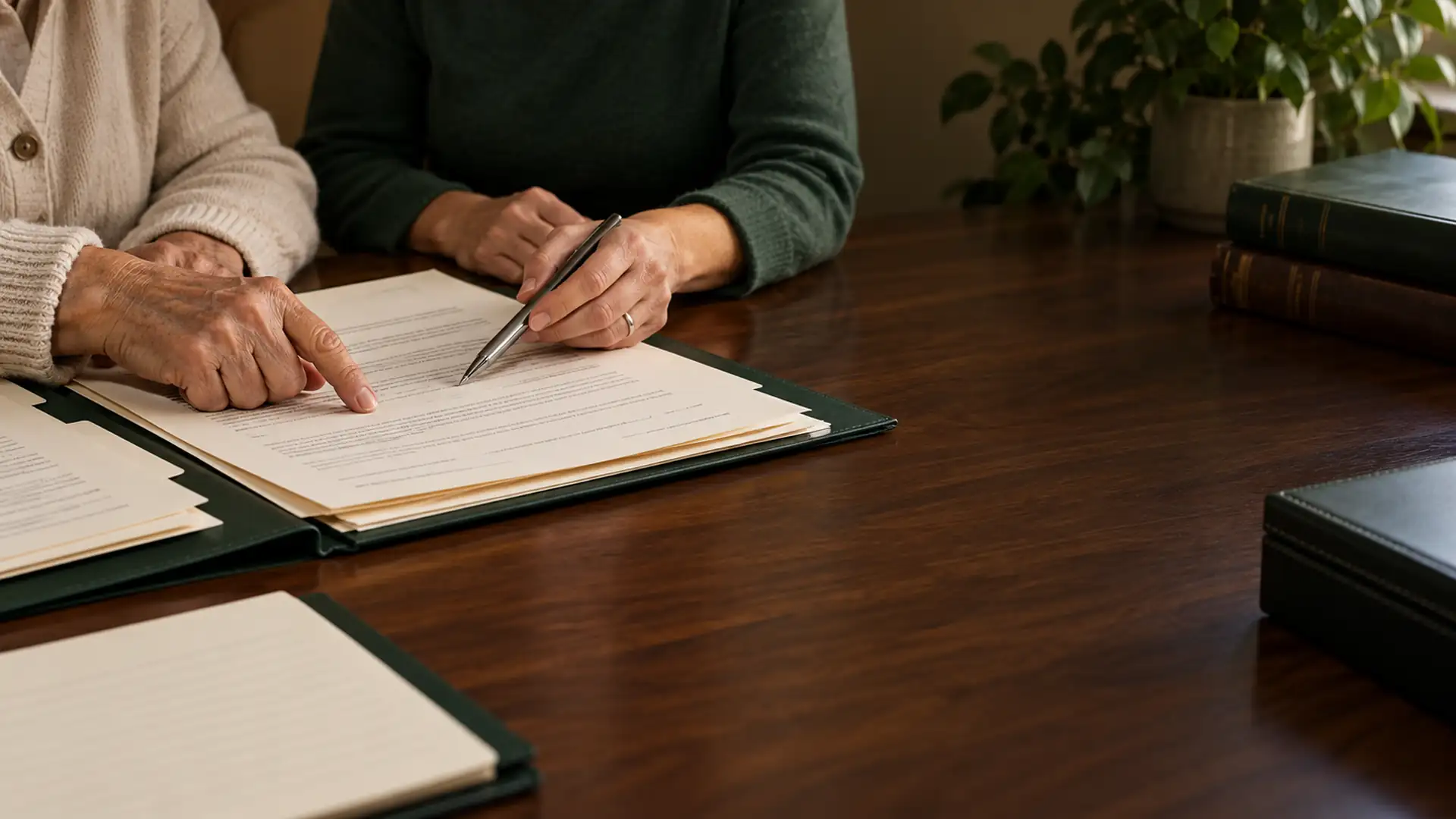
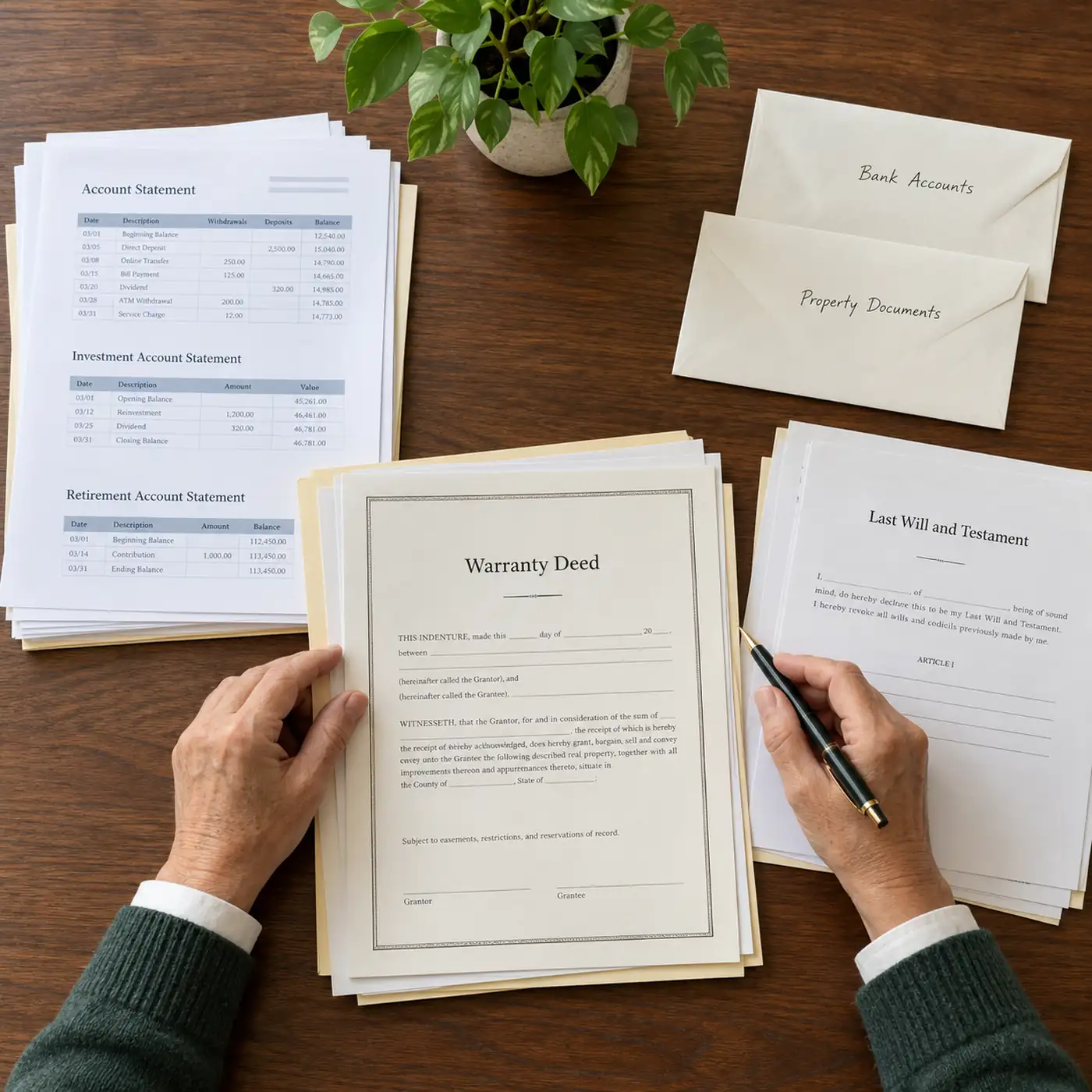
An organized stack of papers and a pen on a kitchen table

Chapter 02

Special cases

Property passing to a surviving spouse, vehicles and wages, and the liability of the person who collects.

Property passing to a surviving spouse

Property that passes to a surviving spouse or registered domestic partner — community property, quasi-community property and separate property left to the spouse — passes without administration (Probate Code §13500). To give banks and title companies a court order confirming the transfer, the spouse can file a spousal property petition (§13650), which is available regardless of the estate’s size.

Vehicles, wages and other special assets

Vehicles are transferred through the DMV with its own affidavit for transfer without probate. A surviving spouse can collect certain unpaid salary owed to the decedent with a short declaration (Probate Code §13600). Retirement accounts and life insurance go to the named beneficiary; if the estate itself is the beneficiary, the account counts toward the small-estate limit.

Responsibilities of the person who collects

Collecting property by declaration does not end the matter. The person who receives it takes it subject to the decedent’s unsecured debts and is personally liable, up to the value received, to creditors and to anyone with a superior right to the property (Probate Code §13109–13112). Final bills, medical claims and taxes should be reviewed before anything is divided among family members.

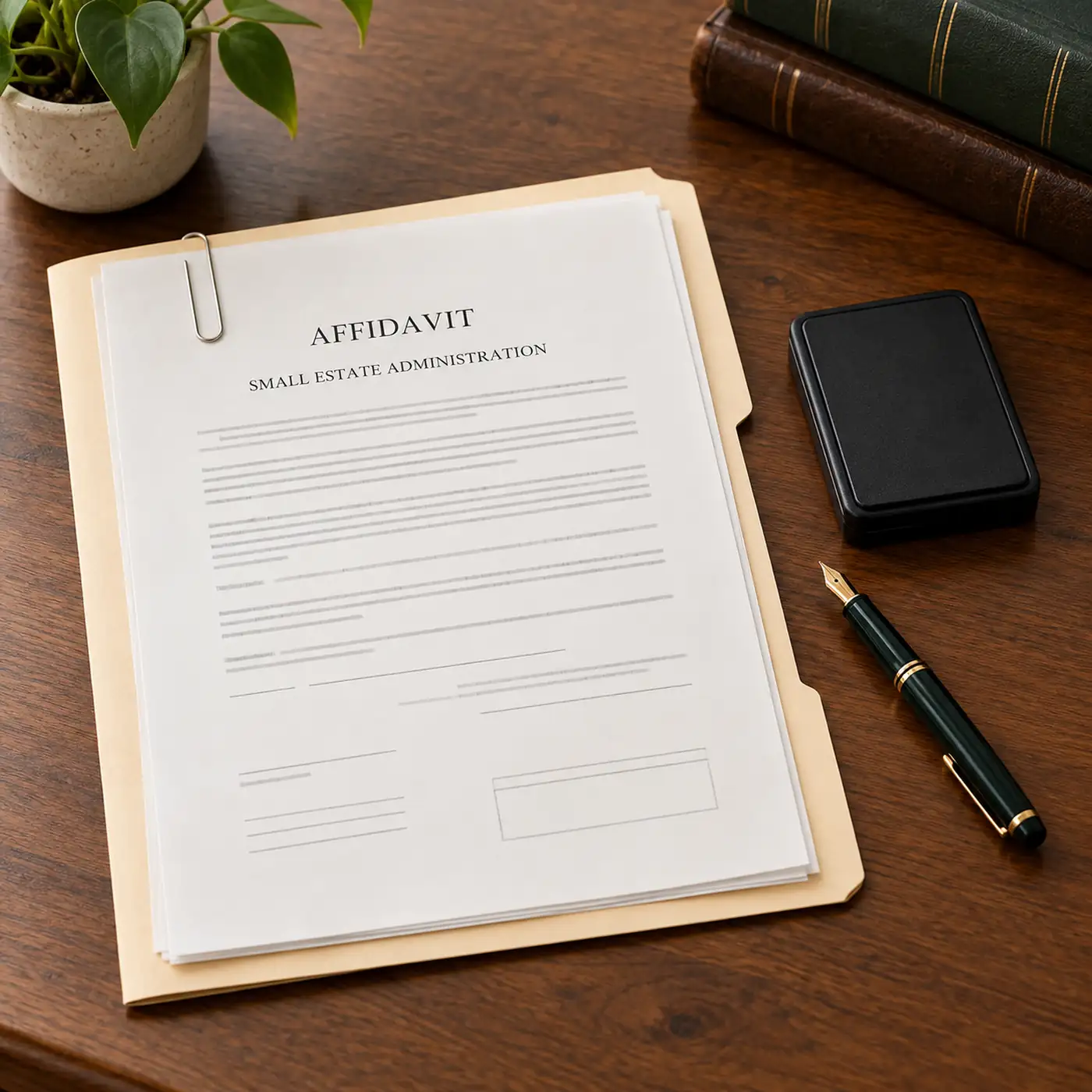
A small house among pines in the Sierra

Chapter 03

Limits and next steps

When formal probate is the better choice, Medi-Cal estate recovery, and planning so the next estate is simpler.

When the small-estate route is a poor fit

Formal probate may still be the better choice when heirs disagree, when creditors’ claims are significant, when the will is unclear or contested, when assets must be sold under court supervision, or when someone needs letters to pursue or defend a lawsuit for the estate. Probate’s creditor period also cuts off late claims, which the declaration procedure does not.

Medi-Cal estate recovery

If the decedent received Medi-Cal benefits after age 55 or while in a nursing facility, the Department of Health Care Services may make a claim against the estate. California limits recovery to property subject to probate, and recovery can be waived or deferred in some circumstances, such as when there is a surviving spouse or a hardship. The claim should be addressed before property is distributed.

Planning so the next estate is simpler

Families who use the small-estate procedures often discover assets that could have passed directly — a bank account without a payable-on-death beneficiary, a car, a small parcel of land. A funded living trust and current beneficiary designations let the next generation avoid both probate and the declaration process.

A woman reviewing a few documents at a kitchen table

Who this is for

A small-estate procedure may fit if any of these is true.

Talk it through
  • The decedent’s assets in their own name total less than $208,850.
  • The main asset is a primary residence worth up to $750,000.
  • Most property passes to a surviving spouse or registered domestic partner.
  • A bank or brokerage firm has asked for a small-estate declaration.
  • Only a vehicle or a single account remains in the decedent’s name.
  • At least 40 days have passed since the death.
  • You want to avoid a full probate if the estate qualifies.

How it works

From first meeting to a completed transfer.

Direct guidance from a Certified Specialist at every step.

  1. 01

    First meeting

    List the assets, their titles and values, and confirm the estate qualifies.

  2. 02

    Choose the procedure

    Match each asset to the right route: declaration, petition, spousal petition or DMV transfer.

  3. 03

    Prepare the documents

    Draft the declarations or petitions and gather certified death certificates.

  4. 04

    Present or file

    Deliver declarations to institutions or file the petition with the court.

  5. 05

    Debts and claims

    Review final bills, medical claims and any Medi-Cal claim before distributing.

  6. 06

    Transfer

    Record deeds, retitle accounts and document what each heir received.

California at a glance

Small Estate Administration, by the numbers that matter.

Current limit
$208,850Gross value of qualifying property for deaths on or after April 1, 2025 (Probate Code §13100). Earlier dates of death use earlier limits.
Waiting period
40 daysThe personal property affidavit can be used once 40 days have passed since the death.
Assets not counted
Joint tenancy, beneficiary and spousal propertyProperty passing by survivorship, payable-on-death or beneficiary designation, or to a surviving spouse, is generally excluded from the limit (Probate Code §13050).
Adjustment cycle
Every three yearsThe California Judicial Council adjusts small-estate thresholds every three years (Probate Code §890).

General California and federal information current as of 2026. Figures adjust over time and every situation is different; confirm how a rule applies to you before acting.

Mistakes we see most often.

Counting the wrong assets
Including trust or joint-tenancy property can make a qualifying estate look too large — or the reverse.
Using the declaration for real estate
Real property needs a petition or the separate real property affidavit.
Presenting the declaration before 40 days
Institutions will refuse it, and an early declaration can be false.
Distributing before checking debts
The person who collects is personally liable up to the value received.
Ignoring a Medi-Cal claim
An estate recovery claim must be resolved before the property is divided.
Using an outdated limit
The limit changes every three years and depends on the date of death.

This page covers

  • Small estate limit
  • Probate Code §13100 declaration
  • 40-day waiting period
  • Excluded assets
  • Petition to determine succession
  • $750,000 primary residence rule
  • Real property of small value
  • Spousal property petitions
  • DMV transfers
  • Collector liability
  • Medi-Cal estate recovery
  • Alternatives to probate

In clients’ own words.

All client reviews
Posted on Google Google
Ronald Schmader profile picture
Ronald Schmader
Google star 1Google star 2Google star 3Google star 4Google star 5Trustindex verifies that the original source of the review is Google.
As grieving parents of our deceased son, we were in need of guidance with regard to what do we do next. Our son was without a will and, we had no experience with how to proceed. Luckily, we contacted Elane at the Andrews Law Firm Truckee who immediately understood our situation and was able to provide the information we needed and the necessary legal paperwork to resolve our problem. Our problem was magnified by the fact that we live in Milwaukee and involved my son's car for which we could not find the title. Rather than have to return to Truckee after 40 days to request a new title, Elane assisted us in creating a power attorney for a friend in Truckee which negated our having to return to Truckee from Milwaukee to simply apply for a new title. We are very appreciative with the help we found at The Andres Law Firm Truckee. Thank you, Elaine!
Posted on Google Google
David VanderJagt profile picture
David VanderJagt
Google star 1Google star 2Google star 3Google star 4Google star 5Trustindex verifies that the original source of the review is Google.
We really appreciate all the excellent work the Andrew’s Law Firm has done with updating our Trust. Her attention to detail is very appreciated and guiding us through our Trust planning has been exemplary . David and Linda VanderJagt
Posted on Google Google
I “Sue” S profile picture
I “Sue” S
Google star 1Google star 2Google star 3Google star 4Google star 5Trustindex verifies that the original source of the review is Google.
Quick and efficient handling of my new Trust.
Posted on Google Google
Stephanie (Lady Lebala) profile picture
Stephanie (Lady Lebala)
Google star 1Google star 2Google star 3Google star 4Google star 5Trustindex verifies that the original source of the review is Google.
We were referred to Elaine Andrew's law firm through a friend and I'm very happy we went and sat down with her. She quickly recognized a few mistakes in our previous trust and worked to correct them and ensure that our trust followed all legal requirements. We now feel confident that we have a very solid trust for the future.
Posted on Google Google
Cindy Ann Homer profile picture
Cindy Ann Homer
Google star 1Google star 2Google star 3Google star 4Google star 5Trustindex verifies that the original source of the review is Google.
Elaine was very supportive and professional. She sincerely listened to my concerns and questions. She advised me of California Laws and guided me through the process of what steps would be the best for preparing my will. Kenneth reviewed page by page of my will with me (before signing) and answered all of my questions. I highly recommend The Andrews Law Firm they made my dreaded will preparation bearable. Thank you.
Posted on Google Google
Linda Smith profile picture
Linda Smith
Google star 1Google star 2Google star 3Google star 4Google star 5Trustindex verifies that the original source of the review is Google.
Process was quick and easy. Appreciated all the help they provided.

This testimonial or endorsement does not constitute a guarantee, warranty, or prediction regarding the outcome of your legal matter.

Frequently asked questions

Questions clients ask about small estate administration.

Straight answers to start with. Bring your own documents and circumstances to a free consultation for advice that fits.

All frequently asked questions
What is the small estate limit in California?

$208,850 in gross value for deaths on or after April 1, 2025. For deaths from April 1, 2022 through March 31, 2025, the limit was $184,500. The limit is adjusted every three years (Probate Code §890).

How soon can I use a small estate declaration?

At least 40 days after the death (Probate Code §13100), and only if no probate is pending.

Does the house count toward the limit?

Yes, unless it passes outside the estate — for example in a trust, in joint tenancy or to a surviving spouse. Real estate often pushes an estate over the limit.

Can a small estate declaration transfer a house?

No. Real property requires a petition to determine succession or, for property of small value, a separate affidavit filed with the court and recorded.

What is the $750,000 primary residence rule?

For deaths on or after April 1, 2025, a petition to determine succession can transfer a decedent’s primary residence worth up to $750,000 to heirs or beneficiaries without a full probate (Probate Code §13151).

Do I need a lawyer for a small estate declaration?

It is not required, but mistakes in counting assets, choosing the procedure or handling debts can create personal liability. Real property petitions benefit most from legal help.

What if the bank refuses the declaration?

A holder must release the property once the statutory requirements are met (Probate Code §13105), though institutions often ask for their own forms. If a holder still refuses, a court petition may be needed.

Am I responsible for the decedent’s debts?

Up to the value of the property you received. The person who collects takes the property subject to the decedent’s unsecured debts (Probate Code §13109–13112).

What if there are several heirs?

Each person entitled to the property signs the declaration, and the holder distributes their shares. Disagreements among heirs are a reason to consider a formal probate.

How do I transfer the decedent’s car?

Through the DMV, which has its own affidavit for transferring a vehicle without probate. Registered vehicles do not count toward the small-estate limit.

How does a surviving spouse transfer property?

Property passing to a surviving spouse passes without administration (Probate Code §13500). A spousal property petition (§13650) gives a court order that banks and title companies accept.

Does Medi-Cal estate recovery apply to small estates?

It can. If the decedent received Medi-Cal benefits after 55 or in a nursing facility, the state may claim against the probate estate, subject to waivers and deferrals.

Northern California service areas

Local guidance, without the long list.

Explore the regions where The Andrews Law Firm provides California-focused counsel. Find your community from one organized coverage page, or contact our Truckee office for consultation options.

View areas served

Related practice areas

Start with one clear conversation.

Bring your questions, your documents and the decisions you want help with. The first consultation is free.