
Estate Planning
California Probate Process: What Really Happens After Death
I explain the California probate process after death, including costs, timelines, and what happens next.
The California probate process often enters the picture at the worst possible moment, when grief is already making basic decisions feel heavy. I know how disorienting that period can feel, and this is the part nobody warns anyone about: settling an estate is not just emotional, it is administrative, slow, and full of rules that seem to arrive all at once.
In plain English, probate is the court-supervised process for wrapping up a person’s legal and financial affairs after death. It usually involves identifying probate assets, paying valid debts and taxes, and transferring what remains to the people entitled to receive it. Not every asset goes through probate, which is why the first question is rarely “how do I start probate?” and more often “does probate even apply here?”
What follows is the full picture, including when probate is required in California, what happens first, how long it usually takes, what it costs, and the planning moves that tend to spare families the most trouble later.
- What probate actually covers
- When California probate is required
- What happens in the first days and weeks
- How a probate case starts in court
- What the executor or administrator does
- How debts, property, and taxes get handled
- What changes if there is no will or a dispute
- How long probate usually takes
- What probate commonly costs
- How estates finally close
- What I’d do to reduce probate trouble ahead of time
What the california probate process actually is
The first thing I like to clear up is that probate is not a punishment, and it is not proof that someone did something wrong. It is simply the legal system’s method for transferring certain assets after death when those assets were not already set up to pass another way.
I have seen families assume that “the estate” means every single thing a person owned. That is not how it works. Probate only controls assets that were owned in the person’s name alone, or in a way that does not automatically pass to someone else. If an asset already has a built-in transfer mechanism, the court often stays out of it.
That distinction matters because people hear probate and imagine one giant process covering the house, every account, the life insurance policy, and personal belongings all at once. Sometimes that is true. Often it is not. A trust, a joint tenancy deed, or a beneficiary designation can completely change what the court touches.
When probate happens in california, and when it Doesn’t
This is usually the threshold issue. Probate in California depends on three things: what the asset is, how title was held, and how much of the probate estate exists under California law.
I have found that title tells the real story. A house worth millions in Truckee or the Bay Area may still avoid probate if it was properly held in a living trust. A much smaller estate can end up in probate if the person died owning assets individually with no beneficiary designations and no trust in place.
For anyone trying to sort out the bigger planning picture, I have found it helpful to compare how trusts and wills handle transfer after death. The differences become very concrete once probate enters the conversation.
Assets that usually go through probate
Assets usually go through probate when they were owned solely in the decedent’s name and lacked a direct transfer method. Common examples include a home titled only in that person’s name, a bank or brokerage account with no payable-on-death designation, a vehicle or business interest that does not qualify for simpler transfer rules, and personal property that was not already assigned through a trust structure.
This is where many families get surprised. A person may have had a will, but a will does not avoid probate by itself. A will tells the court who should receive probate assets. It does not bypass the court process.
Assets that usually avoid probate
Some assets pass outside probate automatically. That often includes property held in a revocable living trust, joint tenancy property, community property with right of survivorship, life insurance with named beneficiaries, retirement accounts with valid beneficiary designations, and payable-on-death or transfer-on-death accounts.
Real estate planning in California often turns on this point. I have seen one deed make the difference between a lengthy court process and a direct transfer. For a closer look at keeping a California house out of probate, title and trust funding are usually the deciding issues.
California’s Small estate options
California does offer simplified procedures in some smaller estates, but people often overestimate how broad those shortcuts are. In the right case, an affidavit procedure can allow transfer of certain personal property without full probate. There are also streamlined options for some real property interests when the estate falls within California’s limits and the facts line up correctly.
The catch is that “small estate” does not mean emotionally simple, and it does not mean no paperwork. It just means the law may allow a shorter path than formal probate.
The first things that usually happen after death
The first days after a death are usually a blur. I know how that feels. I have watched basic tasks like finding a key or locating a statement turn into an exhausting scavenger hunt because grief shrinks attention and time at the same time.
Before any formal probate filing, the practical work starts. Families usually need to secure property, gather documents, figure out what exists, and keep things from slipping through the cracks. This part feels unglamorous, but it prevents bigger problems later.
Gathering the death certificate, will, and key records
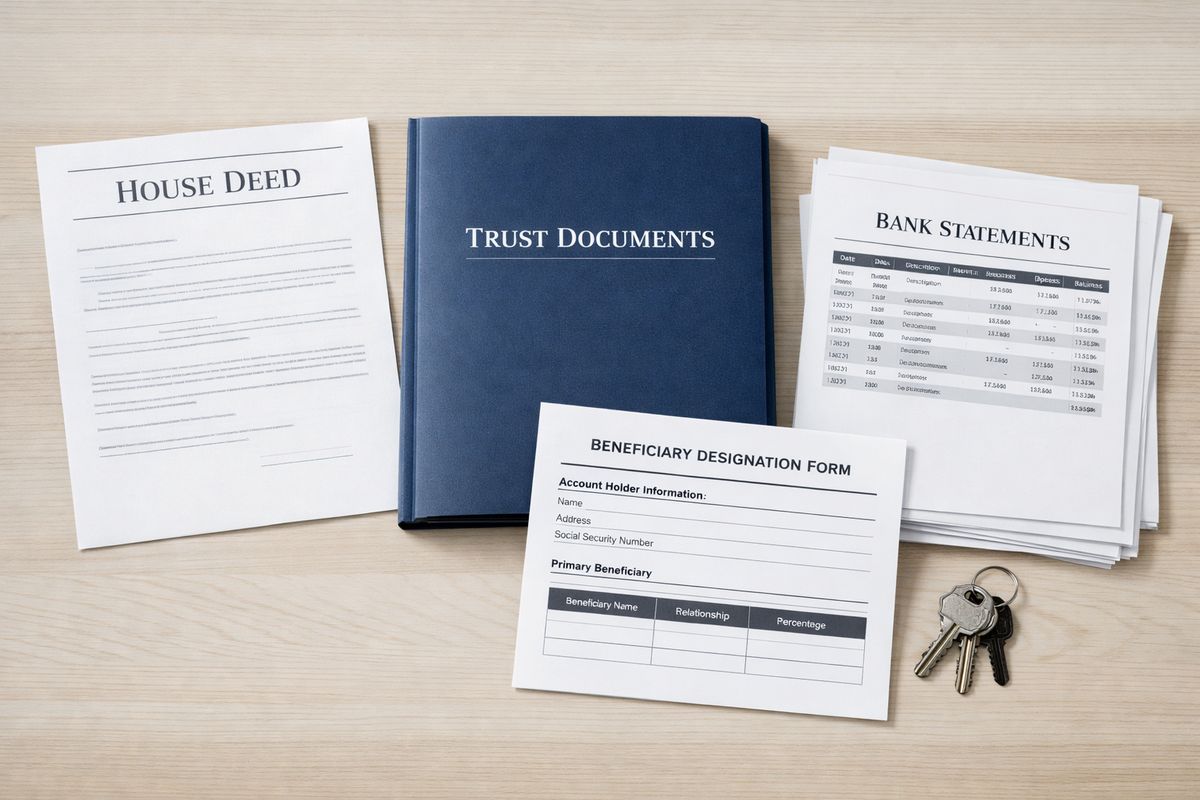
What helped most in the early stage was simple triage. The original will, if one exists, matters. Certified death certificates matter. Recent bank and brokerage statements, deeds, insurance policies, mortgage information, tax returns, business records, and contact information for advisors matter.
I would never underestimate how much time this saves later. Probate decisions are much clearer once the documents are sitting in one place instead of living in drawers, email inboxes, and old filing cabinets. If there is a trust, the trust document and schedules become just as important as the will.
Protecting property right away
Homes need immediate attention. Mail may need forwarding. Valuables may need to be secured. Insurance cannot be allowed to lapse. Utilities usually need monitoring. If there is a vacant home in Lake Tahoe or a second property in Truckee, weather and seasonal vacancy create even more urgency.
This is also when practical details start piling up. Is someone checking for water leaks? Is the mortgage still being paid? Has anyone confirmed homeowner’s insurance coverage for a vacant property? These sound small until they are not.
Deciding whether to file a probate petition
Once the immediate scramble settles a bit, the next move is usually an asset review. I would identify what was owned, how it was titled, whether a trust exists, and the rough value of the probate estate. That is how the path becomes visible.
Sometimes the answer is full probate. Sometimes it is trust administration. Sometimes a small-estate procedure fits. And sometimes the estate plan looked fine on paper but failed because assets were never retitled. That problem comes up more often than people expect, which is why properly moving assets into a trust matters so much.
How a california probate case starts
Once it becomes clear that probate is necessary, the court case begins with a formal petition. This sounds intimidating, but the sequence is fairly structured.
The court is being asked to open the estate, recognize the will if there is one, and appoint the person who will act on behalf of the estate. After that appointment, the real administrative work begins.
Filing the petition for probate
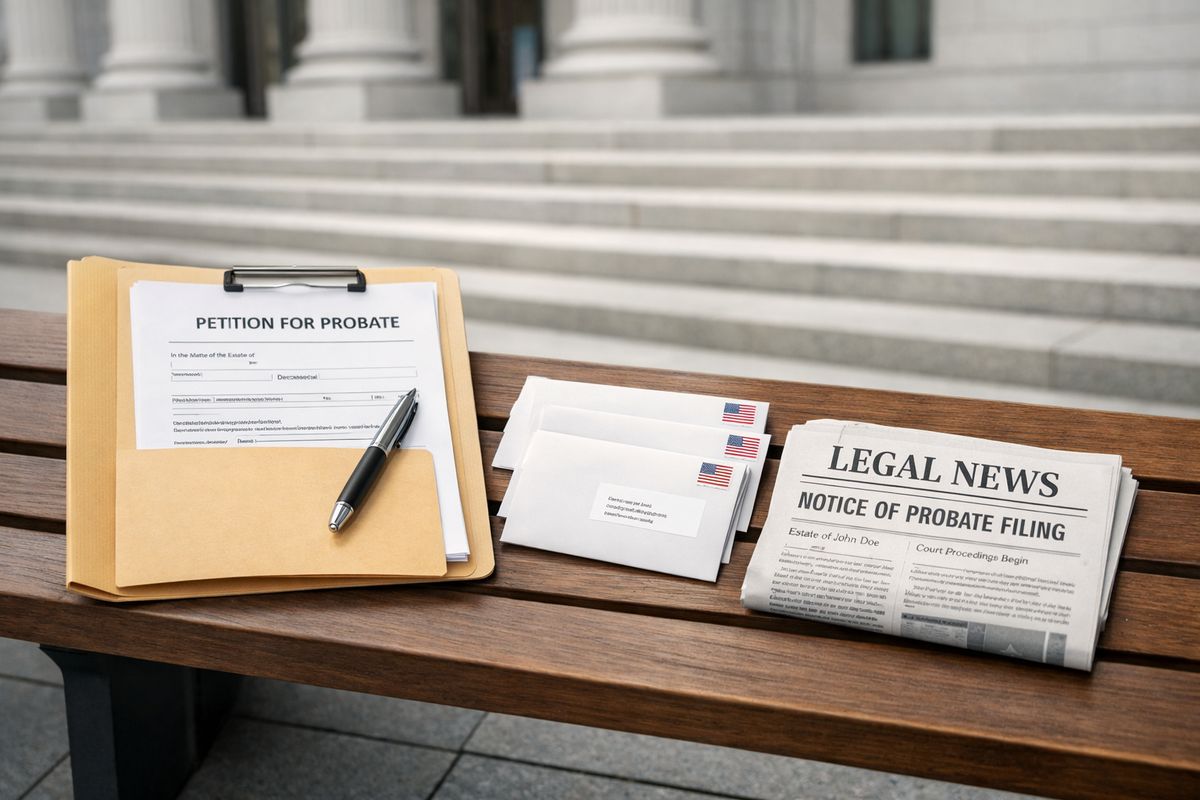
The petition is usually filed in the superior court of the county where the decedent lived. The filing typically includes basic identifying information, a copy of the will if one exists, information about heirs and beneficiaries, and the request to appoint an executor or administrator.
If there is a will naming an executor, that person usually asks the court for appointment. If there is no valid will, someone eligible under California law petitions to become administrator. The paperwork is detail-heavy, but the goal is straightforward: open the estate and identify who has authority to act.
Giving notice to heirs, beneficiaries, and creditors
This is where probate starts to feel slow. Notice usually must be mailed to interested parties, and notice of the hearing may need to be published in a newspaper. Creditors also receive formal notice procedures.
I know this can feel like bureaucracy for bureaucracy’s sake. But legally, notice is the fairness step. It gives family members, beneficiaries, and creditors an opportunity to speak up before the estate moves too far forward.
The initial probate hearing
The first hearing is not usually a dramatic courtroom event. In many cases, it is the point where the judge reviews the petition, resolves any obvious issues, and confirms the appointment of the personal representative.
Once the court issues the needed authority, often called Letters, the estate can begin acting formally. Accounts can be gathered, creditors addressed, and property managed under recognized legal authority.
The role of the executor or administrator
This job is bigger than most people expect. An executor is the person named in a valid will. An administrator is the person appointed when there is no will, or no available executor. California often uses the broader term personal representative to cover both roles.
I have always thought this role gets described too casually. It sounds ceremonial. It is not. It is a fiduciary job, which means the personal representative must act carefully, keep records, follow deadlines, and treat beneficiaries fairly.
What the personal representative is responsible for
The personal representative marshals estate assets, opens an estate bank account, keeps money separate, tracks receipts and expenses, handles creditor issues, protects property, deals with tax filings, and prepares for final distribution.
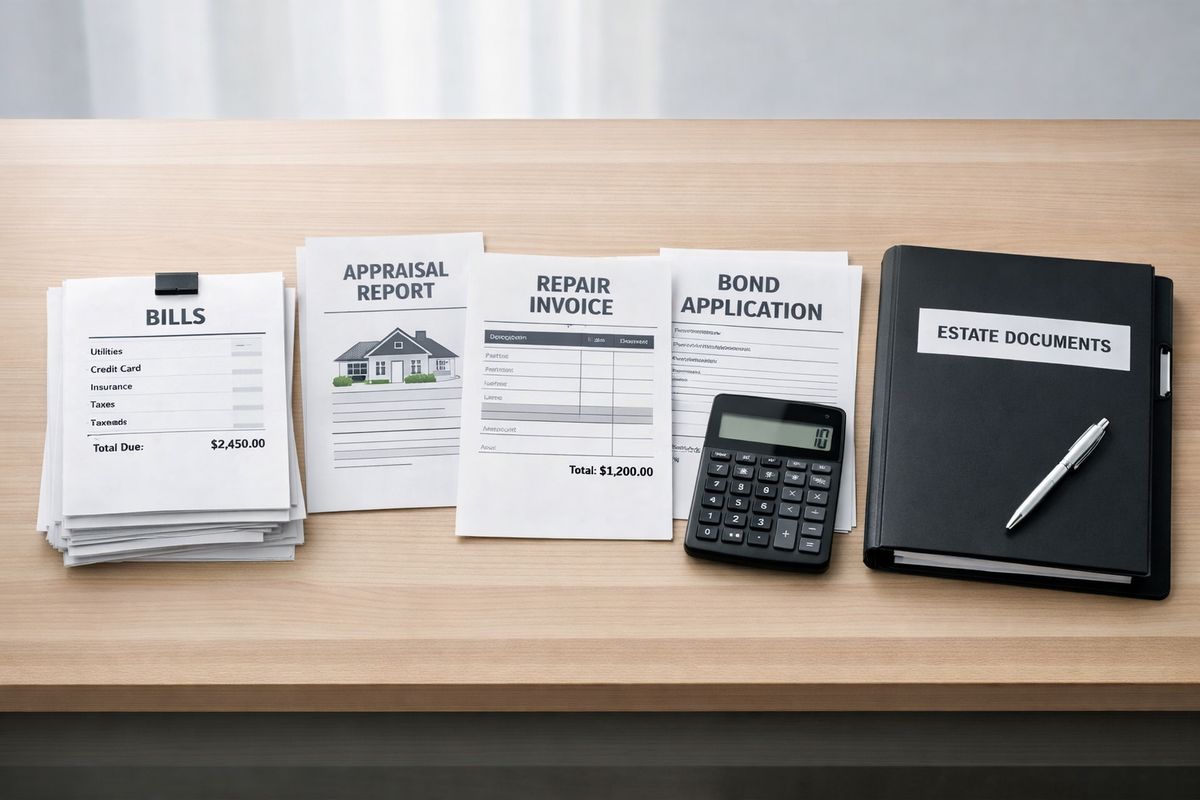
There is also a quiet administrative burden that nobody talks about enough. Every bill, reimbursement, repair invoice, account balance, and communication may matter later. Good recordkeeping is not optional. It is often the difference between a manageable probate and a contentious one.
Independent vs. court-supervised authority
California allows some estates to proceed with broader powers under the Independent Administration of Estates Act. In plain language, this can let a personal representative handle many transactions with less court involvement, though notice rules may still apply in major actions like selling real property.
That extra authority can speed things up. Without it, more actions require direct court approval, which usually means more delay and more cost.
When bond may be required
A probate bond is an insurance-type protection for the estate. Courts may require it unless the will waives bond or the law allows it to be avoided in a particular situation. Even when a will waives bond, the court can still require one if circumstances raise concern.
Bond premiums are one of those expenses families often do not anticipate. They are not always huge, but they add up, especially in larger estates.
What happens during estate administration
This is the middle stretch, and honestly, it is the part nobody warns anyone about. The drama of the initial loss has passed, but closure is still far away. What remains is paperwork, deadlines, waiting periods, maintenance issues, and decisions that rarely feel simple.
In my experience, this phase is where emotional fatigue and administrative fatigue collide. That frustration is real.
Creating the inventory and appraisal
The estate’s assets must be identified and valued. Cash accounts are straightforward because the statement balance tells the story. Other assets are less simple. Real estate, business interests, and many personal property items may need formal valuation.
California probate often uses a probate referee to appraise many non-cash assets. That means even after appointment, there can be a waiting period while values are confirmed. This matters because those numbers affect reporting, fee calculations, and eventual distributions.
Handling debts and creditor claims
Creditors do not get to collect automatically just because a debt exists, but valid claims do need to be handled properly. The estate usually gives notice to creditors, waits through a claim period, reviews what comes in, and pays legitimate obligations in the order required by law.
Some claims are obvious, like mortgage balances, credit cards, final medical bills, or tax obligations. Others are questionable and need review. Paying too soon can be a mistake. Ignoring a valid claim can be a different mistake.
Managing real estate during probate
Real estate is where probate becomes very tangible. Someone has to keep the home insured, maintained, and secure. Mortgage payments, property taxes, utilities, HOA dues, and repairs usually continue even while the estate is waiting on court deadlines.
This is especially significant in Northern California, where real estate values are high and properties may be primary homes, cabins, vacation homes, or rentals. A vacant Tahoe property in winter needs different attention than a condo in the Bay Area. If a sale becomes necessary, timing, authority, market conditions, and disclosure obligations all come into play. For many families, this is also the moment they start seriously comparing probate expenses with trust-based planning.
Filing final income and estate tax returns
The decedent’s final personal income tax return usually needs to be filed. If the estate earns income during administration, a fiduciary income tax return may also be required. Federal estate tax applies only to very large estates, so many California estates will not owe estate tax, but that does not eliminate income tax filing duties.
Tax compliance often holds up final distribution. Even when no tax is ultimately due, clearance and proper filing still matter.
If there is no will, or the will is contested
These are two of the most stressful turns a probate can take. One creates uncertainty because there is no written roadmap. The other creates conflict because the roadmap itself is under attack.
Both can change timelines, costs, and family relationships quickly.
California intestacy rules
If there is no valid will, California intestacy law decides who inherits probate assets. Spouses, children, and in some cases other relatives inherit according to a statutory order. The details can become especially complicated in blended families, separate property situations, and families with children from different relationships.
I have found that many people assume a surviving spouse automatically receives everything. Sometimes that is true. Sometimes it is very much not. A clearer breakdown of who inherits when there is no will helps expose where families tend to make wrong assumptions.
Common reasons a will gets contested
Will contests usually involve claims of lack of capacity, undue influence, improper execution, or fraud. Some disputes are rooted in real legal problems. Others are expressions of old family conflict that finally found a formal outlet.
Either way, once a contest starts, the case gets heavier. More evidence, more hearings, more attorney time, more waiting.
How disputes affect the timeline
A contested probate can last far longer than an uncontested one. So can cases involving unclear ownership, missing documents, family disagreement over personal property, or disputes about the need to sell a house.
This is also where probate costs start climbing faster than expected. Beyond the standard court process, disputes add professional fees, delay distribution, and drain emotional energy.
How long probate takes in california
This is one of the hardest realities to accept. Most people expect legal transfer after death to happen in a matter of weeks or a few months. That is rarely how the California probate process works.
A straightforward probate often takes around nine months to eighteen months, and some take longer. That is not because anyone is necessarily doing anything wrong. It is because the system includes waiting periods, notice requirements, appraisals, possible hearings, and administrative steps that cannot be skipped.
A typical probate timeline
The general flow looks like this: the petition gets filed, the initial hearing is set, the personal representative is appointed, notice goes out, assets are gathered, the inventory and appraisal are completed, the creditor claim period runs, taxes and expenses are handled, and only then does the estate move toward final accounting and distribution.
Every stage has its own lag. Court calendars can be crowded. Appraisals take time. Property issues take time. Selling a house takes time. Even a clean case rarely feels fast.
Why some cases move faster than others
The biggest variables are court backlog, real estate issues, disputes, creditor problems, tax complications, and how organized the estate was before death. A funded trust and current beneficiary designations often avoid this entire sequence. By contrast, a missing original will, an unfunded trust, or a business interest can slow everything down.
For anyone comparing planning options, I have found that the difference between a will and a trust in California becomes much easier to understand once timing is part of the conversation.
What california probate usually costs
This question deserves a direct answer because the numbers can be surprising. California probate often includes court filing fees, attorney fees, personal representative fees, probate referee fees, publication charges, bond premiums, tax preparation, and the ordinary carrying costs of property during administration.
And then there are the sneaky costs. Ongoing insurance. Deferred maintenance. Emergency repairs. Storage. Utility bills on a vacant home. Those are real estate administration costs, not legal theory.
Statutory attorney and executor fees
California sets statutory fees for attorneys and personal representatives based on the gross value of the probate estate. Gross value matters here. Mortgages are not subtracted for this fee calculation.
That detail catches families off guard all the time. A house worth $1.5 million with a large mortgage is still generally measured at its gross probate value for statutory fee purposes. For anyone trying to spot the expenses that are easy to miss, the quieter layers of probate cost are often where the budget starts shifting.
Other expenses that add up
Even in a calm estate, extra costs pile up. A house may need cleanup, repairs, or landscaping. Tax returns may need professional preparation. Personal property may need appraisal or storage. If litigation appears, expenses can rise quickly.
Probate is not only a legal process. It is an asset-management process unfolding in real time, often during grief.
How probate ends and assets get distributed
People often say they want probate “done,” but done has a very specific meaning. The estate is not finished when bills are paid or when the house sells. It is finished when the required reporting is completed, distributions are properly made, and the personal representative is formally discharged or otherwise released from remaining duties.
That final step matters because premature distributions can create personal liability if debts, taxes, or accounting problems surface later.
Final accounting and reporting
Before distribution, the personal representative typically needs to show what came into the estate, what went out, what was paid, and what remains. This accounting can be formal and detailed, especially where court approval is required.
Good records make this much easier. Messy records turn it into detective work.
Distributing property to heirs and beneficiaries
Once the court approves distribution where needed, money can be paid out, personal property transferred, and real estate retitled or deeded to the proper recipients. Sometimes assets are sold and the proceeds distributed. Other times the property itself passes in kind.
The reason distributions usually wait until the end is simple: the estate needs to know what obligations remain before it starts giving assets away.
Closing the estate
Closing usually involves final receipts, final filings, and the last paperwork required by the court. Only then does the personal representative’s role end.
That moment often brings more relief than celebration. After months of deadlines and decisions, simple closure feels big.
Ways I’d reduce probate trouble before it starts
I have seen enough probate to feel confident about this part: the best way to reduce probate stress is planning that actually gets finished, not planning that sits half-done in a binder.
The move that actually helped in real life was not more legal jargon. It was making sure the right assets were titled the right way and the documents matched reality.
Using a living trust for california real estate
For many California homeowners, a revocable living trust is one of the most effective ways to avoid probate for a home. That is especially true in places like Truckee, Lake Tahoe, and the Bay Area, where real estate values alone can make probate hard to ignore.
But the trust has to be funded. A beautifully drafted trust does not avoid probate if the house never gets transferred into it. That is why placing a home into a trust correctly is such a practical step, not just a paperwork exercise.
Keeping beneficiary designations and title current
Outdated beneficiaries create messes. So does old title. I have seen decent estate plans undermined by a retirement account naming a former spouse or a deed that never got updated after creating a trust.
Accounts and title documents need periodic review because life changes faster than paperwork.
Reviewing the full estate plan after major life changes
Marriage, divorce, births, deaths, moves, property purchases, and business changes all affect an estate plan. A will, trust, power of attorney, and healthcare directive only help if they still match current reality.
I would never treat estate planning as one-and-done. It is maintenance. Boring, maybe. But far less painful than avoidable probate problems later.
When it makes sense to get probate help
Some estates stay fairly straightforward. Others become complicated fast. Probate help tends to be especially valuable when there is real estate to manage or sell, a business interest, tax questions, blended family issues, uncertainty about whether probate is required, or any sign of a dispute.
I know how easy it is to freeze at the beginning, especially when everything feels urgent and unclear at the same time. In that moment, the smallest useful action is often the best one: gather the will, the deed, and the latest account statements into one place. That single step usually turns confusion into a workable next move.
Ready to take the next step? Get in touch with Elaine Andrews at The Andrews Law Firm to discuss the situation, request a personalized quote, and explore the best options for the estate. Whether the need is an estate plan, a living trust, or guidance through probate, Elaine can help move things forward with confidence.
Contact us today to schedule your consultation.
Frequently asked questions
Does every estate go through the california probate process?
No. Probate only applies to assets that do not pass automatically by trust, joint ownership, beneficiary designation, or another non-probate method. Many estates involve a mix of probate and non-probate assets.
How much does an estate have to be worth before probate is required in california?
The answer depends on California’s current small-estate thresholds and on which assets count toward the probate estate. The legal title and asset type matter as much as the total number on paper.
Can an executor distribute assets before probate is finished?
Usually, that is risky. Debts, taxes, and expenses need to be understood first. Early distributions can create problems if the estate later needs funds that have already been handed out.
What happens if there is a will but no trust?
A will can direct who receives probate assets, but it does not avoid probate by itself. That is why many California families end up comparing wills with trusts and deciding whether both are needed.
How long does it take to sell a house during probate in california?
It depends on the representative’s authority, court involvement, market conditions, and the home’s condition. A sale can move relatively smoothly in some estates, but probate timelines and notice requirements often make it slower than a standard sale.
What if no one can find the original will?
That can create serious complications. The estate may need to proceed as if there were no valid will unless the court accepts other proof. Missing originals often lead to delay, added cost, and more uncertainty about who inherits.