California Estate Law
Difference between probate and Estate planning California
People often use the terms probate and estate planning as if they mean the same thing. They do not. In California,
People often use the terms probate and estate planning as if they mean the same thing. They do not. In California, probate is a court process that may happen after someone dies, while estate planning is the work you do in advance to protect yourself, your property, and the people you care about.
That difference matters. Probate deals with what happens after death when assets need to be gathered, debts handled, and property transferred. Estate planning is broader. It can address what happens if you become incapacitated, who should make decisions for you, and how your assets should pass with as little delay and conflict as possible.
Understanding the difference can help you make better choices now and spare your family unnecessary stress later.
What Probate Means in California
Probate is the formal court-supervised process for settling a person’s estate after death. In general, that process can involve proving a will, appointing a personal representative, identifying estate assets, paying valid debts, and distributing what remains to heirs or beneficiaries.
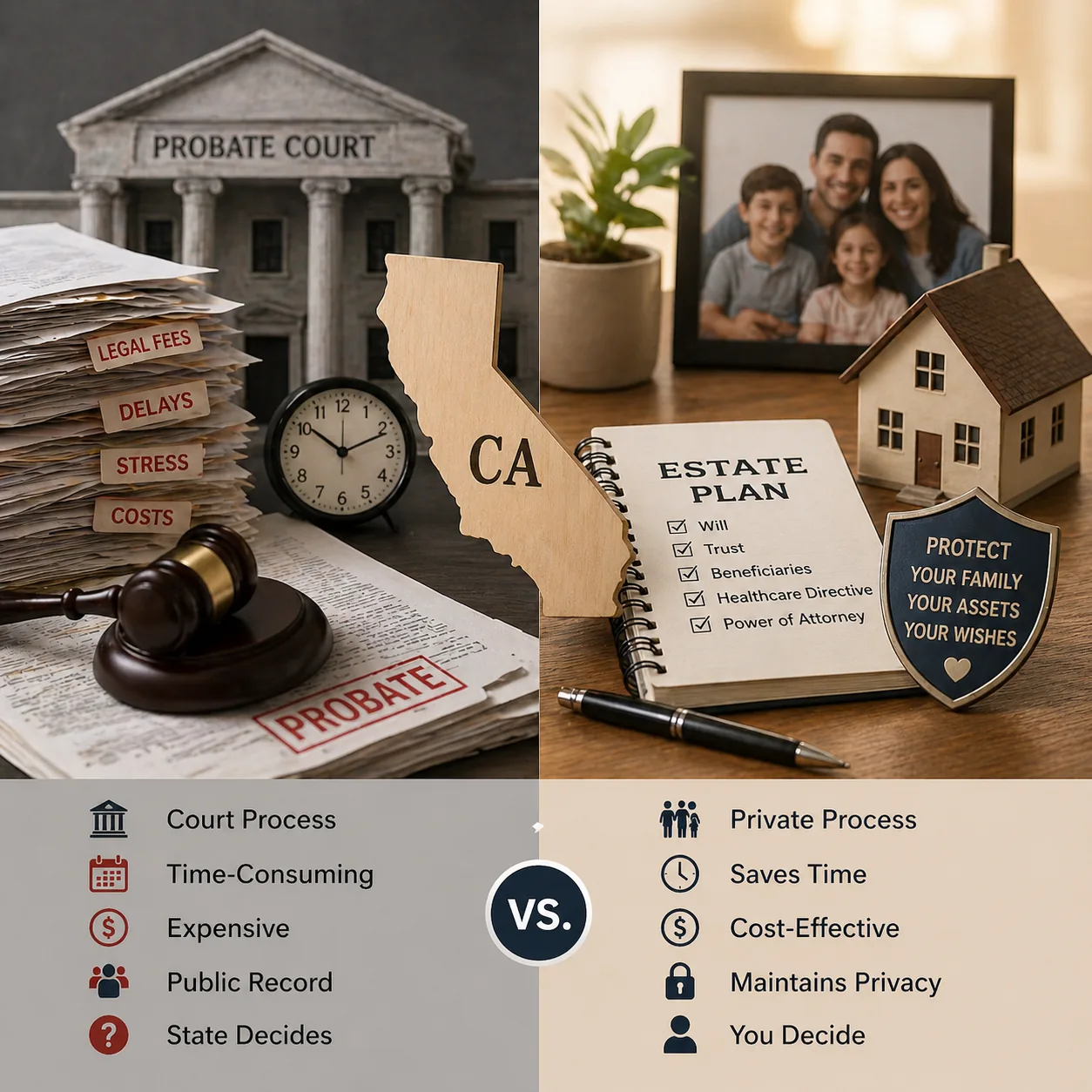
California courts explain that formal probate often takes about 9 to 18 months, and it can take longer if there are disputes or complications. Probate records are also part of the court file, which means the process is not private.
That is one reason families often try to reduce or avoid probate when they can do so lawfully through planning.
What Estate Planning Means
Estate planning is the process of making legal and practical decisions ahead of time. It is not limited to what happens after death. It can also cover what happens if you become unable to manage your finances or make medical decisions during your lifetime.
A California estate plan may include a will, a revocable living trust, a financial power of attorney, an advance health care directive, and beneficiary designations. The right mix depends on your family, your assets, and your goals.
In simple terms, probate is a process the court may require later. Estate planning is the strategy you put in place now.
The Biggest Difference Between Probate and Estate Planning
The clearest difference is timing and control. Probate happens after death and usually involves court oversight. Estate planning happens while you are alive and gives you more control over how your affairs will be handled.
With no plan, California law and court procedures may end up deciding who acts, who inherits, and how long the process takes. With a thoughtful estate plan, you can often make those decisions yourself in advance.
That is why estate planning is usually seen as proactive, while probate is reactive.
How Estate Planning Can Help Reduce Probate
A will does not avoid probate by itself. It can direct who should receive property and who should serve as executor, but assets that are subject to probate still may need to go through the court process.
A properly funded living trust is different. California court self-help materials explain that living trusts can help loved ones bypass probate and avoid the waiting period tied to formal court administration. Assets with valid beneficiary designations or certain joint ownership arrangements may also pass outside probate.
This is why estate planning is often used to make post-death administration faster, more private, and easier for family members.
Why Probate Is Not the Same as a Will
Many people assume that having a will means they have avoided probate. That is a common misunderstanding. A will is one estate planning document. Probate is the legal process that may still be needed to carry out that will.
In other words, a will can guide the probate process, but it does not replace it. If your goal is to reduce court involvement, a more complete estate plan may be needed.
This is especially important for California homeowners and families with multiple accounts, beneficiaries, or blended family concerns.
Estate Planning Also Covers Incapacity
Probate only addresses what happens after death. Estate planning goes further by addressing incapacity during life. That includes naming someone to handle financial matters and someone to make health care decisions if you cannot speak for yourself.
This part of planning is often overlooked, but it matters just as much as inheritance planning. A medical emergency or cognitive decline can create immediate problems even when no probate issue exists yet.
A strong plan helps your loved ones act with legal authority instead of scrambling for court intervention during a crisis.
When Probate May Still Be Necessary
Not every estate can avoid probate completely. Whether probate is required depends on the assets involved, how they are titled, and whether they pass by trust, beneficiary designation, or another transfer method recognized by law.
California does have simplified transfer procedures for some smaller estates. For deaths on or after April 1, 2025, the general small-estate threshold for certain personal property transfers is $208,850, and there is a separate higher limit for a decedent’s main home in some situations. Those rules are specific and do not apply to every estate.
That is why it is risky to assume your family can sort everything out later without reviewing the details first.
Why This Difference Matters for California Families
If you understand the difference between probate and estate planning, you are in a much better position to protect your family. Probate is what your loved ones may have to deal with later. Estate planning is how you make that future easier now.
For many California families, the goal is not just to decide who gets what. It is to reduce delays, preserve privacy, plan for incapacity, and make administration more manageable.
That is where careful legal guidance can make a real difference.
What a California Estate Plan Often Includes
A complete plan usually involves more than one document. The exact combination depends on your needs, but many people benefit from a coordinated set of core planning tools.
- A will for guardianship nominations and backup distribution terms
- A revocable living trust to help avoid probate for trust assets
- A durable power of attorney for financial decisions
- An advance health care directive for medical choices
- Beneficiary designation review for retirement accounts and insurance
- Trust funding and title review so the plan works as intended
How The Andrews Law Firm, P.C. Can Help
Understanding probate is helpful. Planning ahead is better. The right estate plan can help you protect your wishes, reduce court involvement, and make things easier for the people you trust.
If you want to learn more about trusts, wills, probate, or incapacity planning, the resources at The Andrews Law Firm website are a helpful place to start.
A personalized plan can bring clarity now and avoid confusion later.
Talk With The Andrews Law Firm, P.C.
The Andrews Law Firm, P.C. helps California families with estate planning, wills, trusts, and probate matters.
Website: https://theandrewslawfirm.net/
Email: [email protected]
Phone: +1 (530) 550 8736