California Estate Law
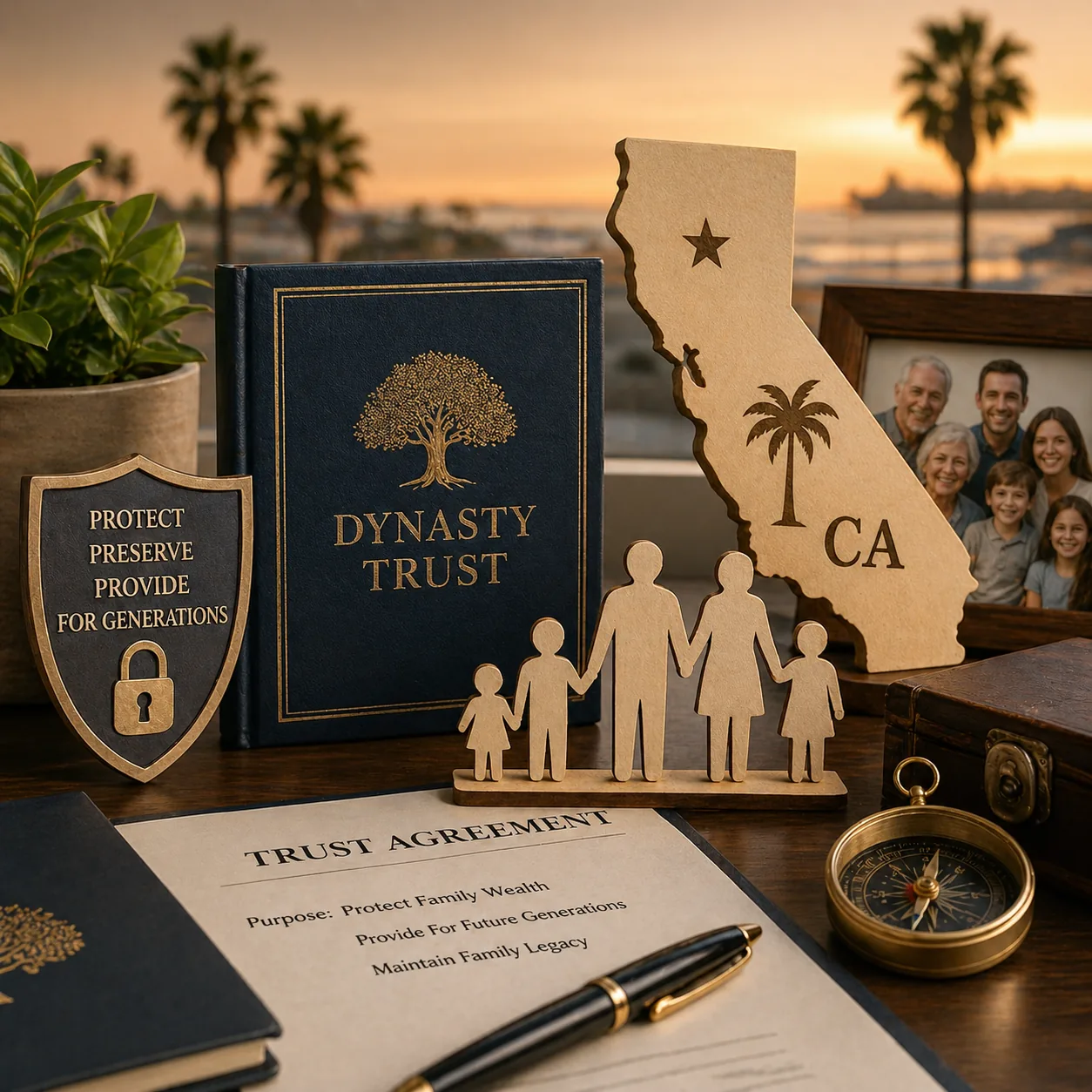
Protecting family wealth with dynasty trusts in California
Many families want to do more than pass assets to the next generation. They want to protect those assets over time and reduce the risk
Many families want to do more than pass assets to the next generation. They want to protect those assets over time and reduce the risk that a child’s inheritance could be lost to creditors, divorce, poor financial decisions, or unnecessary transfer taxes later on.
That is where dynasty trust planning may come in. In California, a dynasty trust is generally used as a long-term trust strategy designed to preserve family wealth for children, grandchildren, and sometimes later generations, while keeping the assets under trust protection instead of distributing everything outright.
For the right family, this kind of planning can create structure, flexibility, and long-term protection. It is not the right fit for every estate, but it can be a powerful tool when multi-generational wealth preservation is the goal.
What Is a Dynasty Trust?
A dynasty trust is a long-term irrevocable trust designed to hold and manage wealth for multiple generations. Instead of leaving an inheritance outright to a child, the trust keeps assets under the terms you set so that future distributions are controlled and protected.
In practical terms, that means a beneficiary may still receive support from the trust and may even have significant control depending on how the trust is drafted, but the assets are not simply handed over with no structure.
This type of planning is often discussed by families who want to preserve investments, real estate, business interests, or other substantial assets over time.
How Dynasty Trusts Work in California
In many California estate plans, dynasty-style provisions are built into a larger trust-based plan. Parents usually keep full control of their own assets during life through a revocable living trust or other planning structure. After death, the inherited share for a child may stay in trust instead of being distributed outright.
That child may serve as trustee of their own trust in some cases, or another trustee may be named depending on the level of protection and control the family wants. The trust terms can define when distributions are allowed, who receives what if the child dies, and how later generations benefit.
California does allow long-term trust planning, but it does not permit an ordinary private trust to last forever. The state’s perpetuities rules generally require interests to vest or terminate within the permitted period, often described as up to 90 years after creation under the statutory framework.
Why Families Use Dynasty Trusts
The main reason families consider dynasty trusts is protection. An outright inheritance can be exposed quickly. Once money or property is distributed directly to a beneficiary, it may become reachable by creditors, vulnerable in divorce, or easier to spend without long-term planning.
Keeping assets in trust can create a buffer. Depending on the trust terms and the facts involved, trust assets may have stronger protection than assets owned directly by the beneficiary.
Families also use dynasty trusts when they want to encourage responsible stewardship, preserve a family property or investment account, or make sure wealth benefits grandchildren and later generations instead of disappearing in one generation.
Potential Benefits of a Dynasty Trust
A dynasty trust can offer several advantages when it is designed carefully and funded properly.
- Long-term asset protection for inherited wealth
- Better control over how and when assets are distributed
- Support for children, grandchildren, and later generations
- A way to keep family wealth under a consistent plan
- Possible tax planning advantages in larger estates
- Protection against outright mismanagement by beneficiaries
Protection From Creditors, Divorce, and Poor Decisions
One of the strongest reasons to use a dynasty trust is to keep inherited assets from becoming part of a beneficiary’s direct personal ownership. That difference matters. Assets held in trust are often in a better position than assets distributed outright when legal, financial, or marital trouble arises.
This can be especially useful for beneficiaries in professions with liability exposure, for beneficiaries with spending issues, or for families that simply want an inheritance to remain protected over time.
No trust can guarantee perfect protection in every situation, and the details matter. Still, a well-drafted long-term trust can be far more protective than leaving everything directly to a beneficiary.
Do Parents Lose Control by Creating One?
Usually, no. Parents generally retain control over their own property during life if the dynasty trust provisions are part of a revocable living trust or another estate plan that stays revocable while they are alive and competent.
The long-term protective trust for a child usually becomes relevant after death, when that child’s inheritance is held under the trust terms instead of being distributed outright.
That means parents can still revise their plan during life if their wishes, family circumstances, or assets change.
Who Should Consider a Dynasty Trust
Dynasty trusts are often discussed in higher-value estate planning, but wealth level is not the only factor. The better question is whether long-term protection and structured inheritance matter for your family.
A family may want to consider this type of trust when there is significant real estate, a family business, a large investment portfolio, a child in a high-risk profession, concern about divorce exposure, or a desire to preserve wealth beyond one generation.
For some families, the trust is about tax strategy. For others, it is mainly about protection and stewardship.
When a Dynasty Trust May Be a Good Fit
Not every estate needs this level of planning. But some family situations make dynasty trust planning especially useful.
- You want children to benefit from assets without receiving everything outright
- You want to preserve family wealth for grandchildren and later generations
- A beneficiary has creditor exposure, business risk, or divorce concerns
- You own valuable real estate or concentrated investment assets
- You want stronger structure around inheritance management
- Your estate may benefit from advanced transfer tax planning
California’s Time Limits Matter
One important point in California is that dynasty trusts are not truly perpetual in the way they may be in some other states. California follows statutory perpetuities rules that generally require the relevant interest to vest or terminate within the permitted period. In many discussions, that is summarized as a 90-year limit under California law.
That does not mean long-term trust planning is unavailable. It means the trust has to be drafted with California rules in mind.
Because these timing rules are technical, dynasty trust planning should be customized carefully rather than copied from generic forms or out-of-state examples.
Flexibility for Children and Future Generations
A good dynasty trust does not have to be rigid. Depending on the trust terms, a beneficiary may have meaningful authority over investments, distribution decisions, or trustee roles while the assets remain protected inside the trust structure.
That balance matters. Families often want protection, but they also want their children to have enough flexibility to use and manage the inheritance responsibly.
The right design depends on the maturity of the beneficiaries, the type of assets involved, and the family’s long-term goals.
Why Professional Drafting Matters
Dynasty trust planning is not a do-it-yourself project. The trust language needs to match California law, tax goals, trustee powers, distribution standards, and the family’s actual concerns.
Poor drafting can create tax problems, administration issues, or protection gaps. Even a technically valid trust may fail to do what the family expected if the structure is too vague or the assets are never coordinated with the plan.
That is why families considering long-term wealth preservation usually benefit from working with an estate planning attorney in California who understands both trust design and practical administration.
Building a Long-Term Family Wealth Strategy
A dynasty trust is not just about passing down money. It is about building a structure that can protect people and preserve family wealth over time. For the right family, it can be one of the most effective ways to avoid outright inheritance risks and create continuity across generations.
If you are exploring advanced trust planning, the resources at The Andrews Law Firm website can be a useful starting point for learning more about trusts, estate planning, and long-term asset protection in California.
The key is to make sure the plan fits your family and is designed to work under California law.
Talk With The Andrews Law Firm, P.C.
The Andrews Law Firm, P.C. helps California families with trusts, wills, probate matters, and long-term estate planning strategies.
Website: https://theandrewslawfirm.net/
Email: [email protected]
Phone: +1 (530) 550 8736