California Estate Law
Which Assets Belong in Your Living Trust?
Trust funding assets in your living trust: what to move, what to leave, and how to avoid probate.
Trust funding assets are the accounts, property, and ownership interests you actually move into your living trust, or line up with it through beneficiary forms. That sounds technical, but the idea is simple: signing a trust is only the setup, and funding it is the part that makes it work when life gets messy, whether that means incapacity, death, or just trying to spare your family a probate headache.
What “trust funding assets” means in real life
A living trust is a legal container for your property. Trust funding means putting the right property into that container.
Here’s the thing: a signed but unfunded trust is like an empty moving box sitting in the garage. The label is on it, the plan is there, but none of your stuff is actually inside. If your goal is to avoid probate, make things easier during incapacity, or keep management of assets smooth for your family, the funding step is not optional.
In real life, trust funding usually means one of two things. For some assets, you change the title so the trust becomes the owner. For others, you leave ownership alone but review the beneficiary designation so it works with your overall plan. If that distinction feels fuzzy, a plain-English breakdown of how trust funding actually works helps make the rest of this much easier to follow.
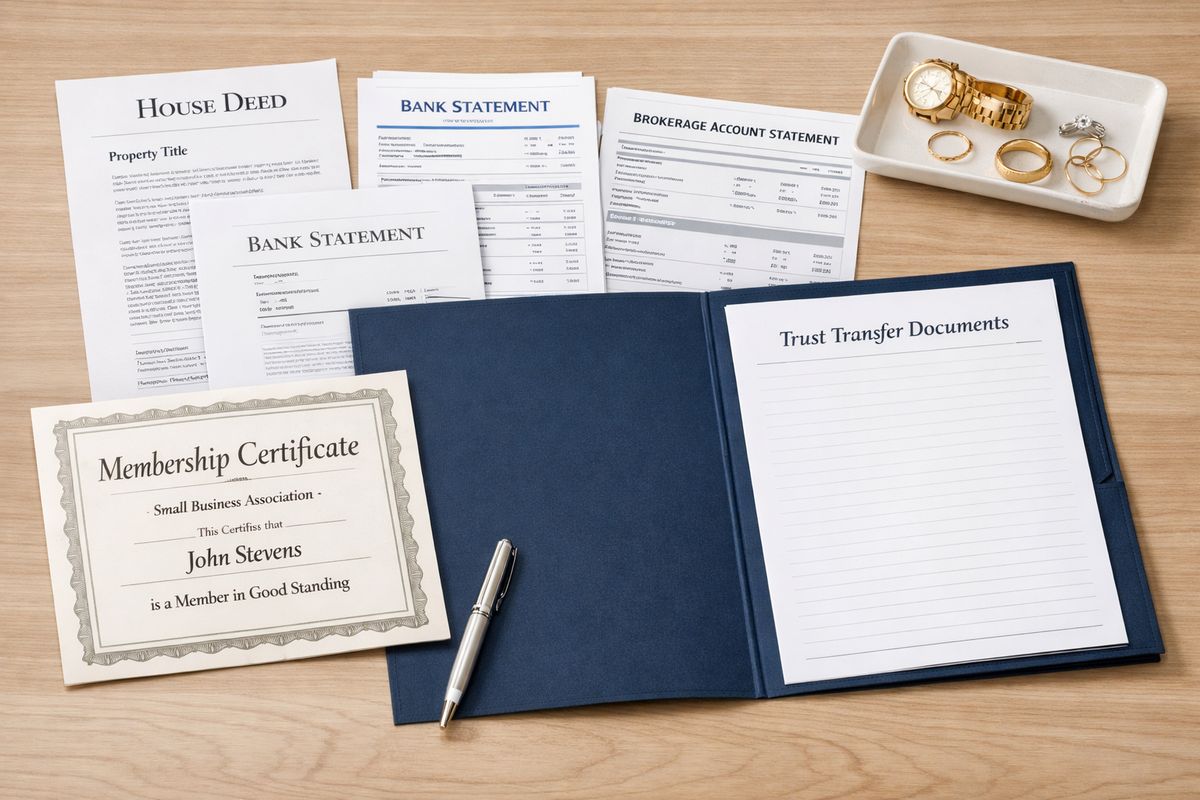
Which assets usually belong in your living trust
Most living trusts hold the assets that would otherwise be awkward, expensive, or time-consuming to deal with if something happened to you. The big goals are usually avoiding probate, planning for incapacity, and giving your successor trustee a clear path to step in when needed.
Real estate
Real estate is one of the most common and most important categories to transfer. If you own your primary home, a Truckee cabin, a Lake Tahoe second home, a Bay Area rental, or vacant land, those properties are often strong candidates for trust funding.
Why does this matter so much? Because real estate is exactly the kind of asset that can drag your family into probate if it stays in your individual name. A new deed is usually recorded to transfer ownership from you as an individual to you as trustee of your trust. If you own more than one property, each one needs attention. One deed does not magically cover everything else you own.
Bank accounts and non-retirement investment accounts
Checking accounts, savings accounts, money market accounts, brokerage accounts, and other taxable investment accounts are also commonly retitled into a trust. That can make a major difference if you become incapacitated and somebody needs to pay bills, manage cash flow, or handle investments without court involvement.
This is where trust funding starts to feel less abstract. If your successor trustee needs to step in, having the account already titled in the trust can save time, paperwork, and frustration. Some families discover this only after an emergency, which is a rough time to find out an account was never updated.
Business interests
Business interests can belong in a trust too, but this category needs more care. LLC membership interests, shares in a closely held corporation, partnership interests, and some sole proprietorship assets may be transferred, but the rules are often buried in operating agreements, shareholder agreements, buy-sell terms, or loan documents.
The catch is not that business interests cannot go into a trust. The catch is that you cannot assume the paperwork is simple. If your plan involves a company you built over years, funding choices should line up with both your estate plan and your succession plan.
Valuable personal property
Valuable personal property often gets overlooked because it is sitting right in front of you. Jewelry, artwork, collectibles, firearms where legally appropriate, and other high-value household items may be assigned to your trust. In many cases, a general assignment transfers personal property to the trust, but some items need separate documentation or extra steps.
That matters most when an item has real financial value or emotional value. Family conflict does not usually start over a lamp. It starts over the watch, the painting, the gun safe, or the antique ring nobody discussed clearly.
Assets that usually stay outside the trust
Not everything belongs in your trust. This is where people get tripped up, because “put everything in the trust” sounds tidy but is often the wrong move.
Retirement accounts
IRAs, 401(k)s, 403(b)s, and similar retirement accounts usually should not be retitled into your living trust during your lifetime. Doing that can trigger tax consequences and unravel benefits you were trying to preserve.
For these accounts, the bigger issue is usually the beneficiary form. If you want a broader comparison of what generally belongs inside and outside a trust, this guide to which property usually makes sense to move over is a useful companion.
Life insurance and annuities
Life insurance and annuities also usually pass by beneficiary designation rather than by retitling them into your trust. Ownership and beneficiary choices matter, though, because those choices affect control, taxes, and how quickly money becomes available after death.
Sometimes naming the trust makes sense. Sometimes naming a person directly is cleaner. The right answer depends on your distribution goals, not on a one-size-fits-all rule.
Health savings accounts and certain tax-sensitive assets
Health savings accounts and similar tax-sensitive assets are closely tied to you as an individual. Those accounts should not be transferred casually. The wrong move can create tax trouble for no good reason.
This is a good place for restraint. If an account exists because of your personal tax status, stop before changing ownership and make sure the transfer actually fits the account rules.
How beneficiary designations work with your trust
Some assets pass by contract, not by your trust. That is the piece many people miss.
Ownership and beneficiary designations are different things. If your trust owns your house, the trust controls what happens to the house. If your retirement account names your sibling, child, or spouse as beneficiary, that account usually goes according to that form, even if your trust says something else. When documents point in different directions, the beneficiary form often wins.
When naming the trust makes sense
Naming your trust as beneficiary can make good sense when you want control after your death. This often comes up with minor children, blended families, beneficiaries who need help managing money, or situations where you want distributions spread out over time instead of handed over in one lump sum.
For example, if your plan is to hold funds for a child until a certain age, naming the child directly can break that plan instantly. Naming the trust may preserve the instructions you actually intended.
When naming a person directly may work better
Direct beneficiary designations can be simpler in straightforward situations. If your goal is fast access, minimal administration, and a clean transfer to an adult beneficiary who can manage money responsibly, direct naming may work better.
That said, simple is not always better if it defeats your bigger goals. A good estate plan is not just about speed. It is about making every part of the plan pull in the same direction. That is also why many people compare a trust with the rest of the planning toolkit, including how a trust, will, and power of attorney fit together.
How to transfer assets into your living trust
Funding a trust is paperwork, but it is very specific paperwork. “I meant to do that later” is one of the most common estate planning problems around.
Retitling real estate
For real estate, funding usually means signing and recording a new deed from you individually to you as trustee of your trust. In California, county recording rules, preliminary change of ownership forms, transfer tax questions, and title details all matter.
If the property is in Placer County, Nevada County, or a Bay Area county, the local forms may look a little different, but the core job is the same: the deed has to be done correctly and recorded. If this step is skipped, your trust does not control the property no matter what your binder says.
Updating financial accounts
For financial accounts, you usually contact the bank or brokerage, provide a certificate or abstract of trust, and complete that institution’s forms. Some institutions make this easy. Some absolutely do not.
The trick is matching the trust name exactly and following through until the account statement shows the right ownership. Do not assume the request was completed just because paperwork was submitted. If you want a more detailed walkthrough, this guide on getting every funding step done in the right order fills in the practical gaps.
Assigning personal property and business interests
Personal property and business interests often require assignment documents, updated ownership records, revised certificates, or company consents. Just listing an item inside the trust papers is not always enough.
That is especially true with LLCs and corporations. If your operating agreement limits transfers, the trust plan has to work with those rules, not against them.

Common mistakes that leave a trust half-funded
A lot of estate plans go sideways after signing day. Not because the trust was bad, but because life moved on and the paperwork did not.
Forgetting newly purchased assets
A new home, a fresh brokerage account, or a new business does not automatically jump into your trust. This is easy to miss after a busy move, a refinance, or a closing day that ended with a stack of documents and a headache.
That is why trust funding is not a one-time event. It is a habit of checking ownership whenever something new is acquired.
Assuming a pour-over will solves everything
A pour-over will is helpful, but it is not the same as proper funding. If an asset stays outside the trust and passes under the will, probate may still be required before that asset reaches the trust.
That is the direct claim worth remembering: a backup plan is not a shortcut. If you have ever wondered what happens when a trust is signed but left mostly empty, the answer is usually more court involvement than anybody wanted.
Creating conflicts between the trust and beneficiary forms
Old beneficiary forms, joint tenancy arrangements, and inconsistent titles can send assets in surprising directions. A house may point one way, an IRA another way, and a life insurance policy somewhere else entirely.
The trick is consistency. Your deed, account title, beneficiary forms, and trust terms should support the same plan.
Special situations to review before you transfer anything
Some assets need a closer look before you change ownership. That is not a reason to avoid planning. It is just a reason to do it carefully.
Mortgaged property, out-of-state property, and vacation homes
Mortgaged property may raise lender or insurance questions. Out-of-state property can involve a second state’s deed rules. Vacation homes near Tahoe, for example, may look simple on paper but still need careful review if ownership, title insurance, or local filing requirements are unusual.
If your goal is to keep your family out of probate court, second homes and out-of-state real estate deserve extra attention because those are often the assets that create the biggest administrative mess later.
Blended families, minor children, and beneficiaries with special needs
Funding choices matter more when timing and control matter more. If your family includes children from different relationships, young beneficiaries, or someone who needs ongoing help managing money, the trust and the beneficiary forms need to be aligned very deliberately.
Otherwise, money can land in the wrong hands, too early, or without the protections you intended.
Business succession and co-owner restrictions
A business interest may be transferable to a trust, but only if governing documents allow it. Buy-sell agreements, partnership terms, and co-owner approval requirements can all limit what you can do.
The catch is not the trust itself. The catch is whether the company documents let you move the interest cleanly without triggering a dispute or default.
A simple checklist to review your trust funding
If your trust has been signed for a while, the best review is practical. Check your real estate deeds. Check account titles. Check beneficiary designations. Check business records. Check anything you bought after the trust was created.
If your plan has changed since then, maybe after a move, retirement, remarriage, or a home purchase, your documents may need an update too. A broader California planning checklist for the basics that often get missed can help you spot gaps outside the trust itself.
Try one thing this week: pull up one recent account statement or one recorded deed and look at the owner name. If the name on that document does not match your trust plan, you found your next fix.
Ready to take the next step? Get in touch with Elaine Andrews at The Andrews Law Firm to discuss your needs, request a personalized quote, and explore the best options for your situation. Whether you need an estate plan, a living trust, or guidance through probate, Elaine can help you move forward with confidence.
Contact us today to schedule your consultation.
Frequently asked questions
Does every asset need to go into a living trust?
No. Many assets work well in a trust, especially real estate and non-retirement accounts, but some assets are better left outside and coordinated by beneficiary designation instead. Retirement accounts are the clearest example.
Can you put your house in your trust if you still have a mortgage?
Usually yes, but the deed needs to be handled correctly and insurance, title, and lender details should be reviewed. A mortgaged home is still one of the most common assets to transfer into a revocable living trust.
Is listing an asset in the trust document enough?
Often no. Real estate usually needs a new deed. Financial accounts usually need institution forms. Business interests may need assignments or consents. The paperwork has to match the type of asset.
What happens if your trust is only partly funded?
Some assets may still go through probate, and a successor trustee may have trouble managing property during incapacity. A partly funded trust is better than no plan, but it often fails to deliver the convenience and court avoidance you expected.
Should your trust be the beneficiary of your retirement accounts?
Sometimes, but not automatically. Naming the trust can help with control for minors, blended families, or staged distributions, but it can also create tax complications if done carelessly. Beneficiary designations for retirement assets deserve a separate review.
How often should you review trust funding assets?
Review them whenever you buy property, open a new account, start a business, refinance real estate, or make a major family change. Even without a big event, a periodic check is smart because newly acquired assets are easy to miss.