
Estate Planning
Putting Your House in a Living Trust: What to Know
Living trust for home: protect your house, skip probate, and plan smarter in California.
Putting your house into a living trust sounds like a big legal project, but the basic move is simple: you create the trust, then retitle the home into it. If you want a living trust for home planning that actually works in real life, not just on paper, hit each step in order and verify the transfer before you stop.
What you’ll need: 15-minute prep list before you move your home into a trust
Set a 15-minute prep goal and get every key document in one place before you touch the deed. That one sprint saves a lot of backtracking later, especially when title language, loan records, and trust names need to match exactly.
Gather your core estate planning documents
Start with your signed living trust, any amendments, your will, and your powers of attorney. If your trust hasn’t been created yet, that comes first. A deed can only transfer your house into a trust that already exists.
Match names across every document. Your full legal name, your spouse’s name if applicable, and the trust name should read the same way everywhere. Small differences, like missing middle initials or an outdated trust date, can create cleanup work later.
Pull your property and loan records
Log your current deed, latest property tax bill, mortgage statement, homeowners insurance declarations page, and any HOA paperwork. Your current deed matters most because it shows how title is held today and gives the legal description that usually needs to carry over into the new deed.
Your mortgage statement helps confirm the servicer, loan number, and mailing address for post-transfer updates. Your insurance paperwork gives you the exact policy information needed once title changes.
Confirm who’s on title and how ownership is held
Track the current ownership setup before drafting anything. Your home might be in your name alone, in joint tenancy, as community property, or as community property with right of survivorship. Each setup affects how the deed should read.
If you’re not sure what you own or why trusts and wills work differently, get clear on how those two tools split up the job. That background makes the transfer steps a lot easier to follow.

Step 1: set the goal, decide whether a living trust for your home is the right play
Set one clear goal before you sign anything. Most home transfers into trust are done to avoid probate, prepare for incapacity, keep family affairs private, or make administration easier after death.
Pin down your main reason for transferring the house
Ship one priority first. If your top target is avoiding probate on the house, the trust needs to be properly funded, meaning title actually changes. If your target is incapacity planning, your successor trustee instructions need extra attention so somebody can step in smoothly if you can’t manage the property yourself.
That focus matters because a trust is not just a document set. It’s a playbook for how the house gets managed later.
Know what a living trust does for a house
Hit the basics: a revocable living trust can hold legal title to your home while you keep full control during your lifetime. You can still live there, refinance, sell, and maintain it, assuming the trust is drafted and funded correctly.
For most homeowners, this is the appeal. The house stays under your control, but the ownership path after death or incapacity gets much cleaner. If your main target is to keep a home out of probate in California, this is one of the most common plays.
Spot situations where a trust may not solve the whole problem
Log the limits now so you don’t run the wrong play. A revocable trust does not erase your mortgage. It does not automatically protect the house from your creditors. It does not wipe out property taxes or homeowner obligations.
It also does not replace every other estate planning document. If you already have a will and think that covers everything, read up on why a trust can still matter even with a will in place. The short version: a will and a trust usually do different jobs.
Step 2: pick the trust structure and key roles
Set a 20-minute decision window and lock in the framework. Most California homeowners putting a residence into trust use a revocable living trust, then name the right people to manage and receive the property.
Choose revocable or irrevocable trust terms
Start with the simple distinction. A revocable trust can be changed or revoked during your lifetime. An irrevocable trust usually cannot be changed easily once signed and funded. For a primary residence, a revocable trust is the standard move because it keeps flexibility.
That flexibility matters. You can move, refinance, amend beneficiaries, or sell without rebuilding the whole structure each time. Irrevocable trusts have their place, but they’re usually part of a different strategy than basic home transfer planning.
Name the trustee and successor trustee
Pick the current trustee and backup trustee with real-world practicality in mind. If you created the trust, you’ll often serve as the initial trustee. Then you name a successor trustee who can step in if you become incapacitated or die.
Choose somebody organized, reliable, and able to deal with paperwork. Owning a house through a trust sounds simple until somebody has to coordinate insurance, taxes, repairs, and sale documents under pressure.
Name the beneficiaries for the home
Log who gets the house, or who gets the sale proceeds, and be specific. If more than one person will inherit, spell out whether the house should be sold and proceeds divided, or whether one beneficiary gets a buyout option.
If minors are involved, the trust should say how funds are managed until a stated age. If your estate includes more than just the home, review which assets usually belong in a California trust so your plan doesn’t stop halfway.
Step 3: review title, mortgage, taxes, and insurance before you transfer anything
Hit this checkpoint before signing the deed. This is where preventable mistakes show up, especially title mismatches, lender confusion, and tax questions.
Check the legal description and parcel details
Track the exact legal description from the current deed, not from a property tax website summary. The legal description may include lot, tract, map book, parcel references, or metes-and-bounds language. Your new deed should match county records closely.
Also confirm the assessor parcel number and property address. An address alone is not enough to transfer title, but mismatched parcel details can trigger headaches.
Review your mortgage and due-on-sale concerns
Start by checking your mortgage status and servicer information. Many homeowners worry that transferring a house into a revocable trust will trigger a due-on-sale clause. In practice, owner transfers into a revocable trust are commonly treated differently than a true sale, but clean lender communication still matters.
Record the deed first, then notify the servicer with a copy of the trust certification or summary if requested. Keep the transfer transparent. If you’re mapping out your broader probate-avoidance strategy, it helps to understand the bigger California probate picture so this transfer fits into the rest of your plan.
Protect your property tax position in california
Log your current assessed value and flag reassessment issues before recording. In many routine transfers of a principal residence into a revocable trust where beneficial ownership stays the same, reassessment may not be triggered, but the paperwork still has to be handled correctly.
This is where county forms matter. A Preliminary Change of Ownership Report, and in some cases a claim form tied to exclusions or trust transfer treatment, helps explain the transfer to the assessor. Get sloppy here and you invite questions you didn’t need.
Plan the insurance update
Ship an insurance update right after recording. Your homeowners carrier should know title has moved from you individually to you as trustee of your trust. Some carriers add the trust as an additional insured or otherwise note the trust interest.
Don’t skip this. If there’s ever a claim, you want the ownership and policy records lined up.
Step 4: create or update the living trust document
Set a same-day drafting goal and make sure the trust language is ready before the deed goes in for recording. A deed without a valid trust behind it is just a paperwork stunt.
Make sure the trust names the property owner correctly
Start with exact trustmaker and trustee names. If title will transfer to “John A. Smith, Trustee of the John A. Smith Revocable Trust dated March 1, 2026,” that wording should match the trust document.
Consistency wins here. Counties reject deeds for less.
Add clear instructions for incapacity and death
Hit the practical terms that tell your successor trustee what to do with the house. Can the home be sold right away? Can somebody live there temporarily? Should expenses be paid from trust funds? Should sale proceeds be split equally, or does one beneficiary receive a credit for improvements or caretaking?
Spell it out. Vague trust language creates family disputes faster than almost anything else.
Coordinate the trust with your pour-over will and powers of attorney
Log your support documents and make sure they still fit the plan. Your pour-over will acts as a backup for assets left outside the trust. Your powers of attorney and health care documents cover decisions the trust itself does not.
If your trust setup is brand new, read through how trust funding works step by step so the house transfer becomes part of a complete system, not a one-off task.
Step 5: prepare the new deed to transfer your house into the trust
Target one clean deed draft. A sloppy deed stalls recording, and a recorded bad deed can take even longer to fix.
Choose the right deed form for your county and situation
Start with the deed form commonly used for a California trust transfer. In many cases, a quitclaim deed or grant deed is used, depending on title history, drafting preference, and transfer context. The right form should fit both the county’s recording rules and your ownership situation.
County formatting rules matter too. Margins, return address blocks, recording request lines, and documentary transfer tax statements all need to be handled correctly.
Write the vesting language correctly
Ship the ownership language with exact names and capacities. A typical transfer moves title from you as an individual owner to you as trustee of your named trust. If more than one current owner is transferring, every current owner must be handled correctly in the deed language.
This is not the place to freestyle. One missing trust date or wrong capacity label can break the chain of title.
Complete preliminary change of ownership paperwork
Log the county forms that usually travel with the deed. In California, the Preliminary Change of Ownership Report often accompanies recording. That form helps the assessor understand why title changed and whether reassessment should be reviewed.
Fill it out carefully. Marking the transfer type wrong can create delays, notices, or a tax review you weren’t expecting.
Step 6: sign, notarize, and record the deed in the right county
Hit the finish line on the transfer itself. Until the deed is signed, notarized, and recorded in the county where the home sits, the house is not fully moved into the trust.
Sign the deed with the correct capacity
Start by signing exactly as the current owner, and where required, in the trustee capacity shown on the deed. Names should match current title and proposed trust title precisely.
If you own the house with somebody else, every required signature has to be there. Missing one signature is an instant rejection or future title problem.
Notarize the deed
Track the notary step carefully. California deeds need proper notarization to be recorded. The acknowledgment language has to be complete and legible, and signatures should be made in the way the deed identifies you.
This sounds routine because it is, but it’s also one of the easiest places to get tripped up.
Record the deed with the county recorder
Ship the deed to the recorder in the county where the property is located, not where you live if those are different. If your property sits in Nevada County, Placer County, El Dorado County, San Francisco, or anywhere else in the Bay Area, record there.
Some counties accept walk-ins, mail submissions, eRecording through approved vendors, or title-company submissions. Use the method that gets you confirmation and a clear paper trail.
Save the recorded copy and update your files
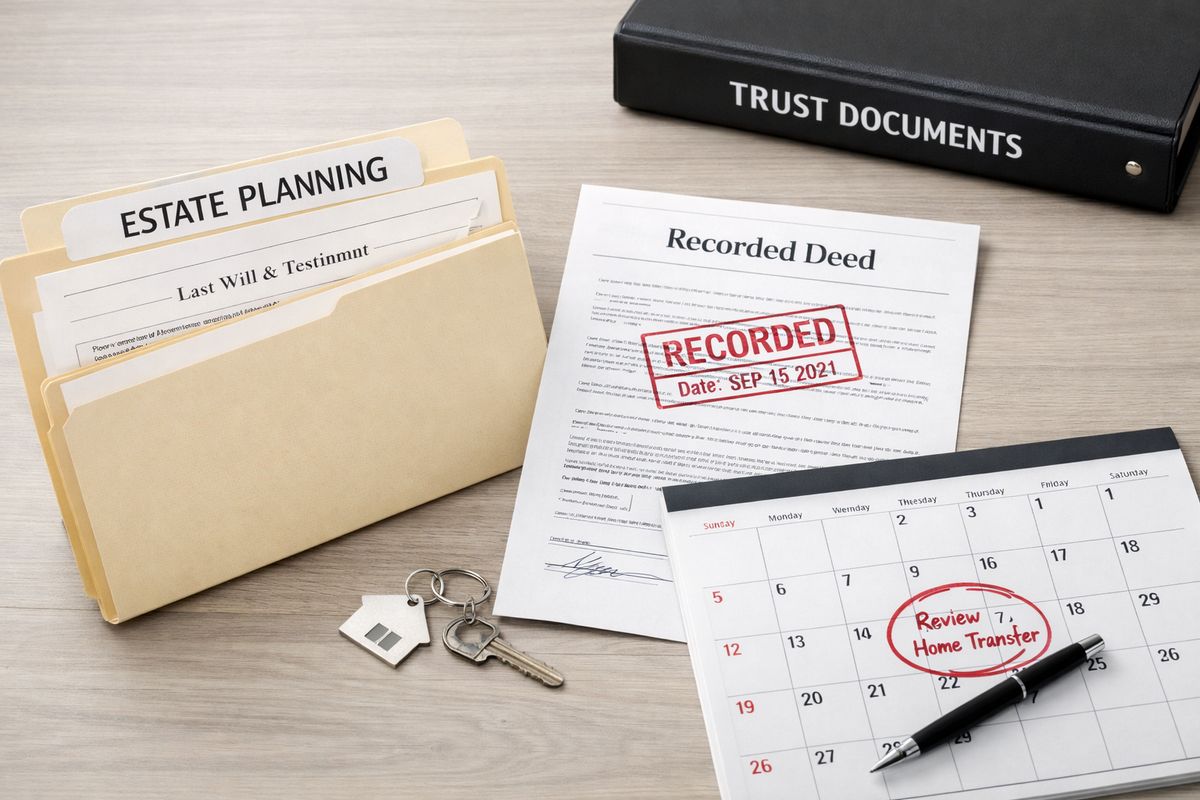
Log the instrument number, recording date, and a saved copy of the stamped deed. Store that with your trust documents, title records, and insurance paperwork.
Then verify the county’s online property record, if available, to confirm the transfer was indexed correctly.
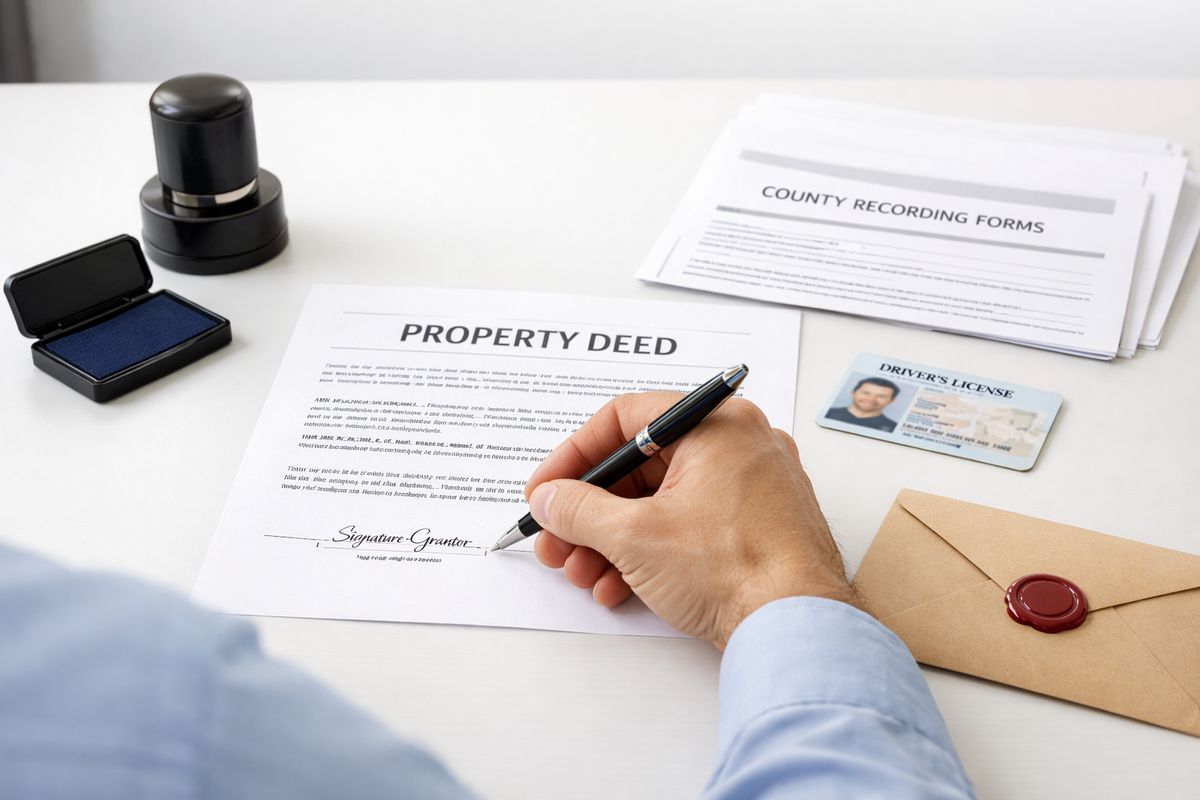
Step 7: update connected records after the transfer
Set a 7-day follow-up target. Recording the deed is the main rep, but the follow-through makes the transfer work in daily life.
Notify your mortgage servicer
Start the lender update right after recording. Send the recorded deed and any trust certification the servicer asks for. Then confirm future statements, escrow notices, and tax records still reach you correctly.
Keep copies of every letter or portal message. Loan servicing departments lose context all the time.
Update homeowners insurance and umbrella coverage
Hit the policy review and add the trust where needed. Ask your carrier how the trust should appear on the policy and whether umbrella coverage should reflect the same ownership structure.
A one-line change now can prevent a coverage argument later.
Check homestead, tax, and mailing records
Log county mailing records, assessor notices, and any homestead-related records connected to the property. Make sure future tax bills and notices still go to the right address and right owner name.
This is also a good point to review how wills and trusts compare on probate and cost if your broader goal is reducing expense and delay for family later.
Review HOA, utilities, and rental documents
Ship the small administrative updates if your property has an HOA, tenants, or a property manager. Ownership changes may require notice under association rules, lease language, or management agreements.
Utilities usually don’t need retitling for estate planning purposes, but property management files often do.
Step 8: handle special situations that change the playbook
Target the exceptions early. Special ownership setups can turn a basic trust transfer into a more technical job.
Transferring a home with a spouse or domestic partner
Start with title coordination. If only one name is on the deed but the home is community property, or if both spouses are on title with survivorship language, your deed and trust structure need to line up with that ownership reality.
Mismatch here can create confusion about shares, tax treatment, or inheritance intent.
Moving a rental, vacation home, or second home into trust
Log the extra details for non-primary residences. This comes up a lot in Truckee and Lake Tahoe, where vacation homes, cabins, and rentals are common. Insurance, property management, tenant notices, and tax treatment may need a closer review than with a primary home.
The transfer method is still deed-based, but the follow-up work is usually heavier.
Dealing with out-of-state property
Hit the separate state-law issue fast. A California trust can own out-of-state real estate, but the deed used to transfer that property must comply with the law of the state where that real estate sits.
That means one trust, potentially multiple deed rules.
Managing a home owned through an LLC or business
Track this carefully. If the property is owned by an LLC, corporation, partnership, or another business entity, you generally don’t just sign a personal deed into your trust. The transfer path may involve transferring business interests instead of the real estate itself, or reviewing loan, liability, and operating agreement issues first.
Step 9: know the pros, tradeoffs, and common myths before you lock it in
Set one reality-check goal before you call the plan done. A living trust for your home can be a strong move, but only if you understand what it does and what it definitely does not do.
Benefits of putting your house in a living trust
Start with the practical upside: avoiding probate, keeping your affairs more private, making incapacity management easier, and giving your successor trustee a cleaner path to handle the house. That can mean less court involvement, fewer delays, and less stress for family.
If you want the bigger picture on avoiding probate in California without missing steps, the house transfer is usually one part of that playbook.
Tradeoffs and costs to expect
Log the real costs. You may pay for trust drafting, deed prep, notary services, recording fees, and future updates when you refinance, move, or amend your plan. If you create the trust but never fund it properly, you’ve paid for a binder, not a result.
Maintenance matters too. New assets, changed beneficiaries, and updated property ownership all need periodic review.
Myths that trip up homeowners
Hit the myths head-on. A living trust does not make your mortgage disappear. It does not block every tax consequence. It does not create automatic asset protection just because the house sits under trust title. And it does not replace a will, powers of attorney, or a complete estate plan.
If you die without a working plan at all, California has default inheritance rules, and those are rarely the finish line anybody actually wants.
Troubleshooting: fix the issues that stall trust funding
Start here when the transfer gets stuck. Most problems fall into a few predictable buckets, and each one has a direct next move.
The deed was recorded with the wrong trust name
Log the exact error and pull the recorded copy immediately. If the trust name, trust date, or trustee name is wrong, title may need a corrective deed or another recorded instrument to clean up the chain.
Don’t ignore a “small typo” if it affects legal identity. Tiny wording errors can become big title headaches during a sale or refinance.
The county rejected the deed
Track the rejection reason line by line. Common issues include bad formatting, incomplete notary acknowledgments, missing Preliminary Change of Ownership paperwork, wrong fees, or a legal description that doesn’t match the last recorded deed.
Fix the stated defect and resubmit fast. Counties usually tell you exactly what failed.
The lender or insurer is asking questions
Ship the shortest clean explanation possible: recorded deed, trust certification or summary, and confirmation that the transfer was into your revocable trust. Most follow-up questions come from file reviewers who just need matching paperwork.
Keep your responses tight and documented.
The house never actually made it into the trust
Start a trust funding check right away. Look at county records, not just your signed trust binder. If the deed was never recorded, or it was recorded incorrectly, the home may still be outside the trust.
That gap matters. A signed trust alone does not move title.
What your finished result should look like, and your next rep by friday
Hit one final scorecard before you stop. Success here is not “documents signed.” Success is “title changed, records updated, plan coordinated.”
Confirm the home is titled in the name of the trustee
Log the final county record and confirm the deed shows title in the name of the trustee of your trust. Keep the recording number, date, and a clean copy of the recorded instrument in your main estate planning file.
That’s your proof the transfer worked.
Check that the rest of your plan matches the new title
Start a quick review of the rest of your estate plan. Check beneficiary designations, backup documents, and other major assets so your home isn’t the only thing aligned. If your trust is funded for the house but nothing else, the plan may still leave loose ends.
This is where a paired review of your will, trust, and major asset titles pays off.
Book your next update window
Ship a calendar reminder by Friday for your next review. Recheck your estate plan after a refinance, move, marriage, divorce, death in the family, major remodel, new property purchase, or big change in who should serve as trustee.
Ready to take the next step? Get in touch with Elaine Andrews at The Andrews Law Firm to discuss your needs, request a personalized quote, and explore the best options for your situation. Whether you need an estate plan, a living trust, or guidance through probate, Elaine can help you move forward with confidence.
Contact us today to schedule your consultation.
Frequently asked questions
Does putting your house in a living trust change your property taxes in california?
Not automatically. Many transfers of a home into your own revocable living trust do not trigger reassessment when beneficial ownership stays the same, but the forms still need to be completed correctly. The details matter, especially if ownership percentages or beneficiaries change.
Can you refinance a house after putting it into a trust?
Yes, in many cases. Lenders often ask for the property to be transferred out of the trust temporarily during the refinance, then transferred back in afterward, though some handle it without that extra step. The key is making sure title and loan paperwork stay aligned.
Do you still need a will if your home is in a trust?
Yes. A pour-over will still matters because it catches assets left outside the trust and works with the rest of your estate plan. A trust is powerful, but it’s not a full replacement for every supporting document.
Can your mortgage company stop you from transferring your home into your revocable trust?
Mortgage companies often ask for notice or paperwork, but a transfer into your own revocable trust is commonly treated differently than a sale to somebody else. Clean communication helps keep the file moving and avoids account confusion.
Is a living trust enough to protect your house from lawsuits or creditors?
Usually no. A standard revocable living trust is mainly an estate planning tool, not an asset protection shield. If your target is lawsuit or creditor protection, that’s a different strategy and needs a different playbook.
What happens if you create the trust but never transfer the deed?
Your house may still be outside the trust. That means the property could still go through probate or create administration problems later. Always verify the recorded deed instead of assuming the trust document handled the transfer by itself.