California Estate Law
Estate Planning for Single Individuals in California
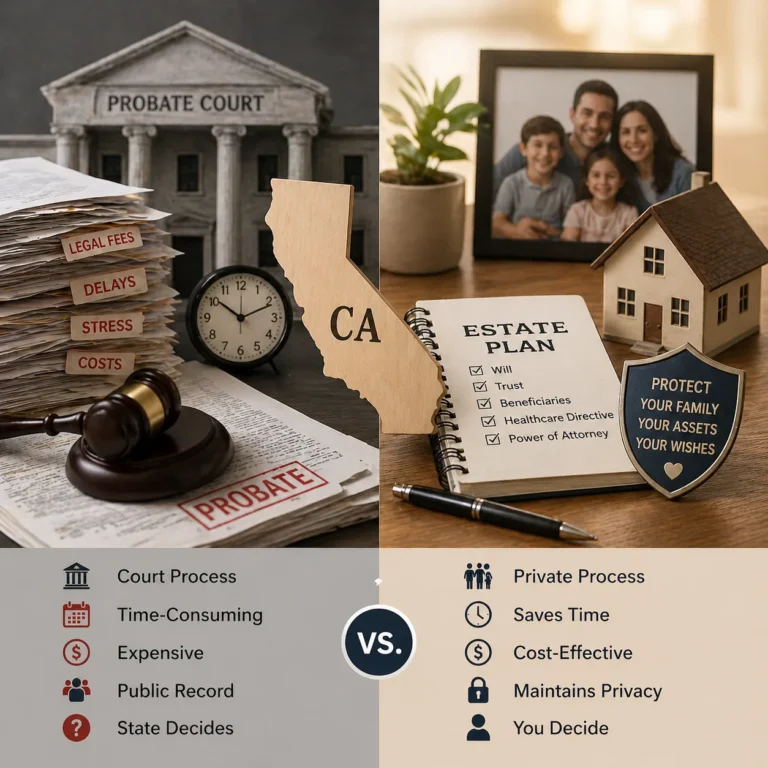
Single Californians face unique estate planning challenges. Without a plan, the state decides who gets your assets—and the people who matter most to you may get nothing.
There is a widespread assumption that estate planning is primarily something married couples and parents need to worry about. Single individuals, the thinking goes, have simpler finances and fewer obligations, so the urgency is lower.
This assumption is wrong—and for single Californians, it can be costly. Without a spouse or co-parent to step in during a health crisis or at death, a single person’s estate is more exposed to court intervention, family conflict, and unintended outcomes than almost any other situation. The good news is that the right plan can address all of it.
What California Law Does With Your Estate If You Have No Plan
When someone dies without a will or trust in California, the state distributes their assets according to intestate succession laws. For single individuals, this means assets pass first to parents, then to siblings, and then to more distant relatives in a defined order.
The people who may have mattered most to you—a long-term partner, a close friend, a chosen family member, a charity you supported for years—receive nothing unless you have documented your wishes in a legally valid estate plan. If no living relatives can be located, the entire estate escheats to the State of California.
Unique Challenges Single Individuals Face
Single people face estate planning challenges that are distinct from those of married couples, and in some ways more acute.
- Medical decision-making during incapacity. If you are hospitalized and unable to communicate, someone must be authorized to make healthcare decisions on your behalf. Without an advance health care directive, a court may appoint a conservator you have never chosen—or would never have chosen—to make those decisions for you.
- Financial management during incapacity. Similarly, without a durable power of attorney, no one has the legal authority to pay your bills, manage your accounts, or handle financial matters while you are incapacitated. This can leave critical obligations unmet and assets at risk.
- No automatic next of kin with legal authority. A spouse automatically has certain legal rights in emergencies. Close friends and unmarried partners have none, regardless of the nature or length of your relationship. Only a properly executed estate plan gives those individuals legal standing.
- Care for dependents and pets. If you are solely responsible for a child, elderly parent, or a pet, a plan ensures continuity of care rather than leaving those arrangements to chance.
The Documents Every Single Californian Needs
A complete estate plan for a single individual typically includes the following core documents.
- A will. A will names the beneficiaries of your estate, designates an executor to carry out your wishes, and—if you have minor dependents—names a guardian for them. Without a will, the court decides all of these questions.
- A revocable living trust. Assets held in a trust bypass the probate process entirely, which means faster distribution, reduced costs, and complete privacy. For single individuals with real property or complex assets, a living trust is often the most practical planning tool available.
- An advance health care directive. This document designates a trusted person to make medical decisions on your behalf if you are unable to do so, and records your wishes regarding treatment, resuscitation, and end-of-life care.
- A durable power of attorney for finances. This authorizes a person you choose to manage your financial affairs during any period of incapacity, avoiding the need for court-supervised conservatorship.
Protecting Unmarried Partners and Close Relationships
California law does not grant inheritance rights to unmarried partners, regardless of how long you have been together or how central they are to your life. The same is true of close friends, mentors, and others who may feel like family.
If you want someone to receive any part of your estate, you must name them explicitly—in a will, a trust, or through a beneficiary designation on accounts and insurance policies. An estate plan is the only mechanism through which you can ensure the people you care about are protected.
Tax and Digital Asset Considerations
Single individuals do not have access to the unlimited marital deduction that allows married couples to transfer assets to a surviving spouse without estate tax consequences. Depending on the size of your estate, this distinction matters. Strategies such as irrevocable life insurance trusts or charitable remainder trusts may be worth exploring as part of a broader plan.
Digital assets are increasingly important for single individuals as well. Cryptocurrency holdings, online banking accounts, email archives, and social media accounts all require planning. A well-drafted estate plan can include provisions granting your designated representative the authority and access information needed to manage or close these accounts.
When to Create or Update Your Plan
The right time to create an estate plan is before you need one. For single individuals, this means acting now—not waiting for a major health event, a large purchase, or a life change to prompt the conversation.
Your plan should also be reviewed every few years and updated any time you buy property, receive a significant inheritance, start a business, end or begin an important relationship, or experience any other significant change in your circumstances.
Andrews Law Firm works with single individuals throughout Northern California—including Truckee, Tahoe City, and the greater Sierra Nevada region—to build estate plans that are clear, thorough, and tailored to their specific situation. Contact us to schedule a consultation.