
California Estate Law
Essential Estate Planning Moves Every Family Should Know
Essential estate planning documents, funding your living trust, and updating your plan in California.
Estate planning usually becomes urgent at the worst moment, after a late-night hospital call, a sudden loss, or the realization that your house, accounts, and family cabin near Lake Tahoe would be hard for anybody else to sort out tomorrow. The good news is that the right plan is not mysterious. It is a set of practical decisions and essential estate planning documents that make life easier for your family, protect your wishes, and cut down on avoidable court trouble.
Estate planning means creating legal instructions for what happens to your money, property, health care, and decision-making if you die or cannot manage things yourself. In real life, that usually includes a will, a trust if it fits your situation, powers of attorney, health care documents, and a clear plan for how assets are titled and passed along.
Here’s what you’ll learn in this guide:
- What estate planning actually covers
- Which documents matter most
- When a will may be enough
- When a living trust makes sense
- Why trust funding gets missed
- How revocable and irrevocable trusts differ
- When to update your plan
- How to change a living trust correctly
- What business owners should add
- What happens after death or incapacity
Start with the problem estate planning actually solves
Most estate planning problems are not really legal problems at first. They are family problems.
Somebody needs to pay the mortgage. Somebody needs access to accounts. Somebody needs to talk to doctors. Somebody needs to know whether the house should be sold, kept, or transferred. If your instructions are missing, outdated, or scattered across a kitchen drawer and an old binder in the hall closet, stress rises fast.
That is the real job of an estate plan. It gives the right people the right authority at the right time. It also reduces guessing, conflict, and delay. For many families in Northern California, that matters even more because a house often makes up a big share of the estate, and real estate is where things tend to get expensive and complicated.
What estate planning means in real life
Estate planning is not just about who gets what after death. It is also about who can step in while you are alive if you cannot handle finances, sign documents, or make medical decisions.
That distinction matters. A plan that only speaks at death leaves a big gap during incapacity. A complete plan covers both.
The goals most families care about
Most families are trying to do a handful of very normal things. You want to avoid probate if possible, especially if you own California real estate. You want minor children protected and cared for by people you trust. You want somebody reliable handling finances if you become incapacitated. You want medical wishes respected. And you want to lower the odds of family conflict by leaving clear instructions.
Smoother transfers matter too. When accounts, deeds, and beneficiary forms line up with your documents, administration is simply easier. Less scrambling. Fewer surprises.
Who needs an estate plan
If you own a home, have children, expect somebody to make medical decisions for you, or want control over who handles your money if you cannot, this matters now.
Homeowners often need planning sooner than expected because a single house can push an estate into probate territory. Parents need guardian nominations and a plan for managing money for children. Retirees need updated incapacity documents and beneficiary reviews. Business owners need continuity plans. Blended families need extra clarity.
If you want a good starting point for the California basics, it helps to review what usually belongs in a solid state-specific plan.
The essential estate planning documents every family should know
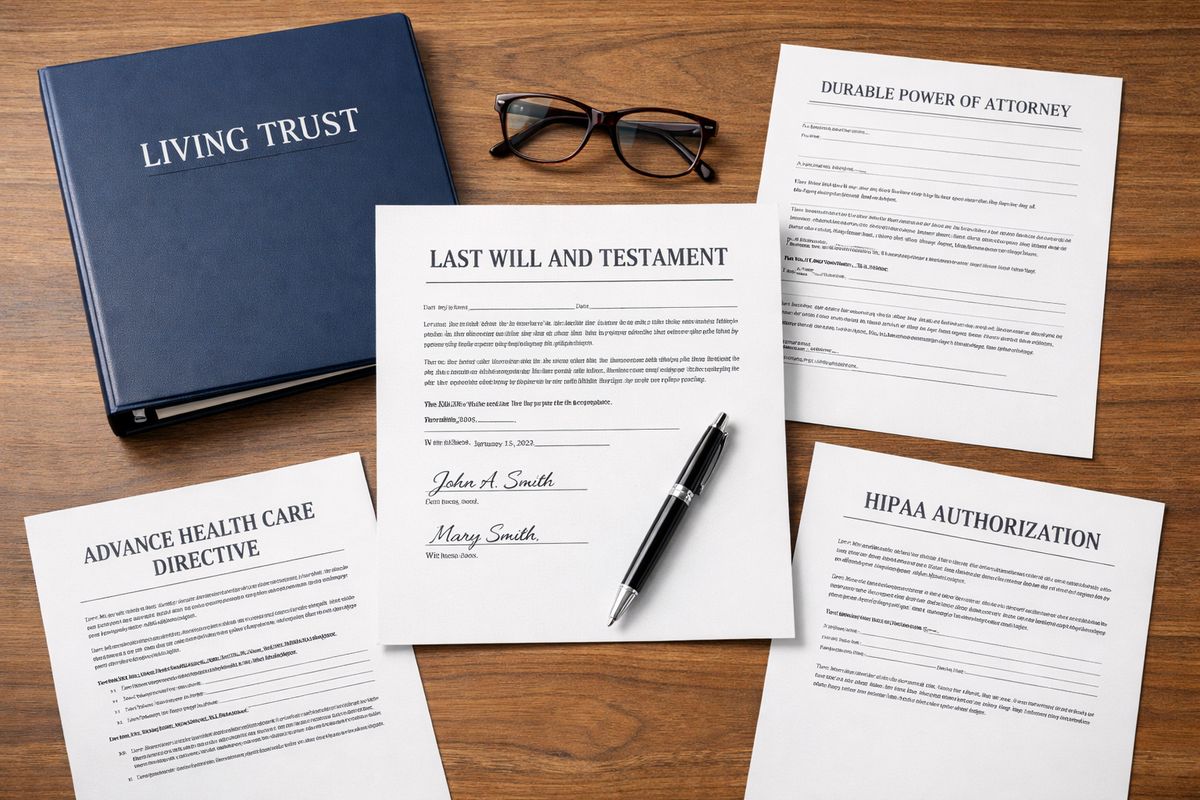
A good plan usually works like a tool set, not one magic paper. The core essential estate planning documents each do a different job, and the plan works best when those jobs line up.
Last will and testament
A will says who should receive assets that pass under your estate, who should serve as executor, and, for parents, who should be guardian of minor children. That last point is a big one. Even if you have a trust, a will is still often where guardian nominations live.
What a will does not do is avoid probate for assets titled in your individual name alone. That is the catch. A will gives instructions, but the court may still need to supervise the transfer process.
A will also does not help much during incapacity. It only speaks at death.
Revocable living trust
A revocable living trust is a legal container that holds assets during your lifetime and then directs what happens to them after death. While you are alive and able, you usually stay in full control. You can serve as trustee, use the assets, sell property, buy new property, and change the terms.
The practical appeal is simple: assets properly held in the trust can usually avoid probate, and if you become incapacitated, a successor trustee can step in and manage trust assets without a court conservatorship in many situations. If you want a deeper look at the way these documents fit together, this guide on how a trust, will, and power of attorney each handle different jobs is useful.
Durable financial power of attorney
A durable financial power of attorney lets you name somebody to handle non-trust financial matters if you cannot. That can include signing tax returns, dealing with retirement accounts, handling benefits, managing bills, or working with assets that never made it into the trust.
A trust does not replace this document. Not even close. If an asset is outside the trust, or if a bank needs a separate agent for a specific task, a power of attorney may be the document that keeps everything moving.
Advance health care directive
An advance health care directive names the person who can make medical decisions for you if you cannot speak for yourself. It can also state your wishes about treatment, pain relief, end-of-life care, organ donation, and related issues.
This document helps during some of the hardest moments a family can face. Clear instructions matter because they spare loved ones from guessing what you would have wanted.
HIPAA authorization and supporting forms
HIPAA authorization forms allow medical providers to share protected health information with the people you name. Without that permission, getting updates can become harder than it should be.
Supporting forms can include final disposition instructions, separate lists of digital assets, and practical summaries of accounts and contacts. These are not glamorous documents, but honestly, they are often the ones that make a plan usable.
Will or living trust: which one fits your situation?
This is one of the first questions most families ask, and for good reason. A will is simpler on the front end. A living trust can reduce headaches later. The right answer turns on what you own, where you own it, and how much court involvement you want your family to deal with.
When a will may be enough
A will may be enough if your situation is truly simple. Maybe your assets are limited, your probate exposure is low, or most of what you own passes by beneficiary designation or joint ownership. In that kind of setup, a trust may not add much value.
Still, simple does not mean carefree. A will-only plan can leave your family dealing with probate if enough assets remain in your name alone. That tradeoff should be clear from the start.
When a living trust earns its keep
A living trust usually makes more sense if you own a home, care about privacy, want easier administration, have a blended family, or own property in more than one state. The more moving parts you have, the more a trust tends to earn its keep.
This is especially common for Northern California homeowners. A primary residence in the Bay Area, a cabin in Truckee, or a rental near Tahoe can quickly turn a basic estate into one that benefits from trust planning. If you are weighing the choice, it helps to compare the practical differences between these two paths.
Why probate is often the deciding factor
Probate is the court-supervised process for transferring assets after death when those assets do not pass automatically some other way. In plain English, it is the public, procedural route.
California probate is often the deciding factor because it can take time, add cost, and require formal steps that families would rather avoid. Real estate often triggers the conversation. If your name alone is on the deed to a house in San Francisco, Truckee, or elsewhere in California, probate risk becomes hard to ignore.
How a living trust works day to day
A living trust sounds abstract until you break it into roles and tasks. Day to day, it is less mysterious than people expect.
The people involved in a trust
The grantor is the person who creates the trust. The trustee manages the trust assets. The beneficiary receives benefits from the trust. With a revocable living trust, you often wear all three hats at once while you are alive and competent.
That is normal. You create the trust, manage the property inside it, and benefit from it. Later, if you die or become incapacitated, a successor trustee steps in.
What a successor trustee actually does
A successor trustee manages trust assets, pays bills, keeps records, communicates with beneficiaries, and follows the written instructions in the trust. If you become incapacitated, that may mean paying your expenses and managing your property for your benefit. After death, it may mean gathering assets, settling debts, and making distributions.
The job is part paperwork, part judgment, part patience. It is not just handing out checks.
What a living trust does not do
A revocable trust does not automatically save estate taxes for most people. It does not create broad creditor protection while you remain in control of the assets. It does not replace your health care directive or durable power of attorney. And it does not work on assets that were never transferred into it.
That last point is where plans often break down. An unfunded trust is a bit like buying a safe and never putting anything inside. If you want to understand that risk better, read about what goes wrong when a trust never actually gets the assets.
Funding your living trust: the step people miss most
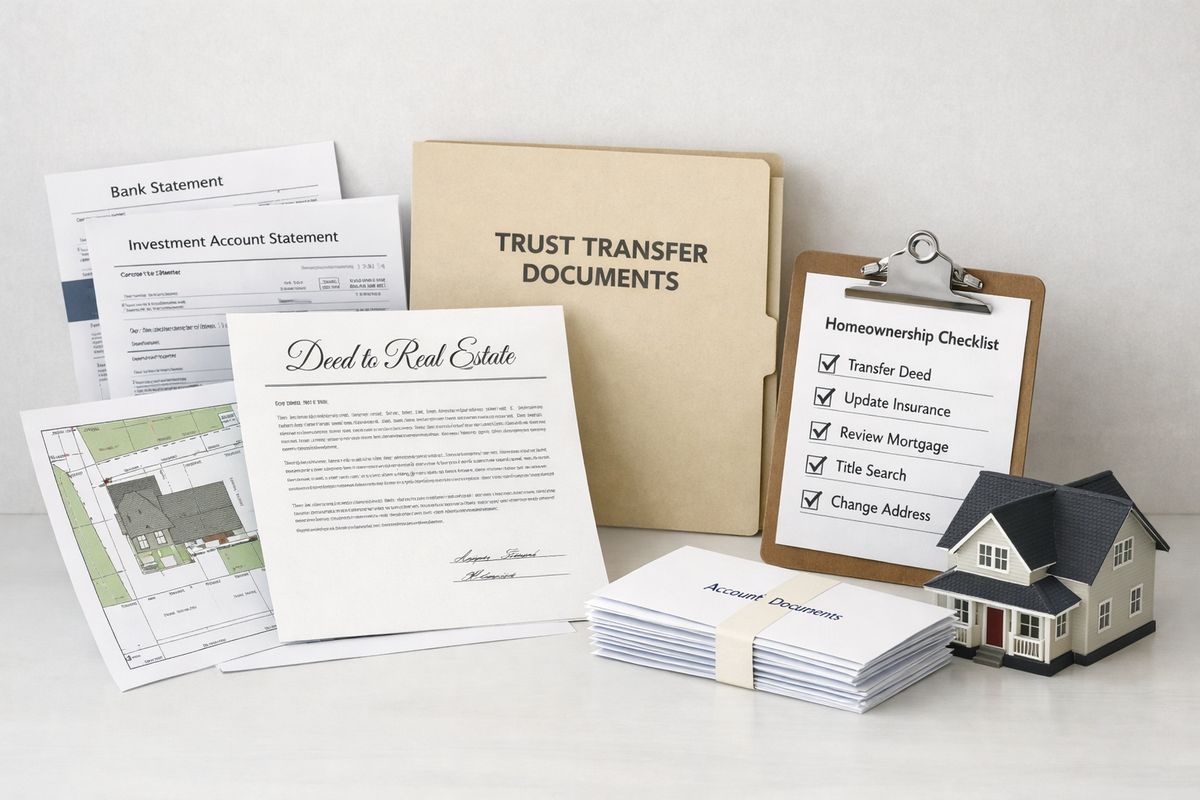
Funding Your Living Trust is where good intentions meet real-world follow-through. A trust only controls assets that are actually connected to it. If your documents are beautifully signed but the house, brokerage account, or business interest still sits outside the trust, the trust cannot do much with those assets.
This is one of the most common gaps in estate planning. And yes, it causes real trouble later.
What “funding” means
Funding your living trust means changing title or ownership on certain assets so the trust becomes the owner, or updating beneficiary designations when that is the right move. The trust exists on paper, but funding is what makes it operational.
In practice, that can mean recording a new deed for your home, retitling a non-retirement brokerage account, or assigning a business interest into the trust if your governing documents allow it.
Assets that usually belong in the trust
Homes are often the first asset to transfer. Rental property commonly belongs there too. Non-retirement investment accounts, brokerage accounts, and some business interests often go into the trust as well. Valuable personal property may be covered through assignment language, though certain items may need separate handling.
For many families, the house is the biggest item on the list, and also the one most likely to cause problems if missed.
Assets that usually stay outside the trust
Retirement accounts such as IRAs and 401(k)s usually stay in your individual name because retitling them to a trust can trigger unwanted tax consequences. Life insurance may stay outside too, though beneficiary designations still need review. Everyday checking accounts may or may not go into the trust depending on your setup and convenience.
The key is not forcing every asset into one bucket. The key is making sure each asset has the right path.
Common funding mistakes
The classic mistake is simple: the trust gets signed, but the deed never gets changed. Another common problem is forgetting older bank accounts or leaving newly purchased property outside the trust. Inconsistent beneficiary designations can create a different kind of mess, especially when account forms contradict the trust.
Business interests can be tricky too. Transfer restrictions, consents, or corporate formalities may apply.
A practical trust funding checklist
Start with your deed. Confirm how your home is titled right now, not how you assume it is titled. Then review major accounts, one by one, and check the legal owner listed on each statement. After that, review beneficiary forms for retirement accounts, life insurance, and payable-on-death accounts.
If you want a more detailed walkthrough, this plain-English guide on what trust funding really involves helps, and this resource on which assets usually belong inside the trust makes the review easier.
Revocable versus irrevocable trusts: the difference that matters
Revocable Versus Irrevocable Trusts is really a question about flexibility versus separation. Both can be useful. But they solve different problems.
What a revocable trust lets you do
A revocable trust lets you stay in control. You can change beneficiaries, switch trustees, amend the terms, add property, remove property, or revoke the trust entirely while you are alive and competent.
That flexibility is why revocable trusts are so common for everyday estate planning. They fit normal family life because life changes.
What an irrevocable trust changes
An irrevocable trust usually means assets are moved out of your personal ownership and into a structure you cannot freely change later. That loss of control is not an accident. It is often the feature that creates planning benefits.
Depending on the design, those benefits can include asset protection, estate tax planning, or long-term care planning advantages. But the tradeoff is real. Once assets are in, getting them back or changing the rules may be limited.
Control versus protection
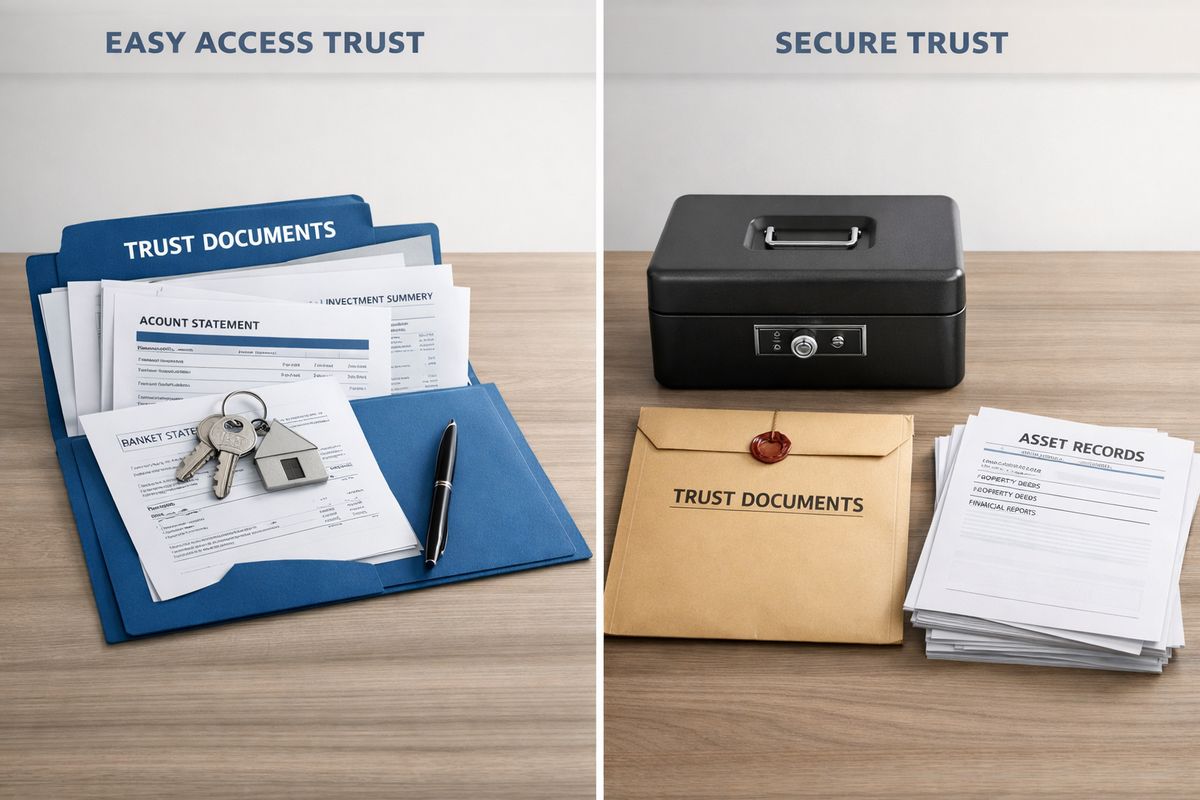
Here’s the thing: revocable trusts usually win on convenience and flexibility. Irrevocable trusts may do more for protection and advanced planning because you are giving up some personal control.
That is the center of the comparison. If you want simple management, probate avoidance, and the ability to keep editing the plan, revocable often fits better. If your goals involve shielding assets, reducing taxable estate exposure, or planning around long-term care risks, irrevocable planning may deserve a closer look.
When each type tends to make sense
A family with a home, savings, and children often uses a revocable trust as the core estate planning tool. A retiree concerned about long-term care or a high-net-worth family focused on transfer tax planning may explore irrevocable options. A business owner worried about liability may need more than a basic revocable trust can offer.
For a closer side-by-side comparison, see how these two trust types line up in practical planning.
Naming the right people in your plan
Good documents can fail in the hands of the wrong people. That is not dramatic. It is just true.
Choosing an executor, trustee, and agents
Pick people who are reliable, organized, level-headed, and actually willing to do the job. A good choice returns calls, keeps records, handles conflict calmly, and can follow instructions without making everything personal.
Being the oldest child or the nicest sibling does not automatically make somebody the best fit.
When family is the right choice and when it is not
Family can be the right choice when trust is strong, communication is decent, and the person named can handle pressure. But sometimes distance, conflict, health issues, or old resentment make a family choice a bad one.
In some situations, a neutral third party is better. That could be a fiduciary, professional trustee, or another trusted person with enough distance to stay steady.
Backup choices you should never skip
Every major role should have a backup. Executor. Trustee. Health care agent. Financial agent. Life changes fast. Somebody moves away, becomes ill, loses capacity, or simply becomes the wrong fit over time.
A plan without backups is stronger than no plan, but only barely.
Protecting children, loved ones, and inheritance goals
This is where estate planning stops feeling like paperwork and starts feeling personal.
Naming guardians for minor children
Guardian nominations usually belong in your will, and they do much more than fill in a blank. You are naming who will raise your children if you cannot. That decision should include values, parenting style, location, age, health, and the practical ability to take on the role.
A name alone is not enough in your own mind. You want a real picture of how life would work.
Leaving assets to children without creating a mess at 18
Leaving assets outright to a child at age 18 is rarely the best answer. A trust can hold funds for health, education, support, and maintenance while staggering distributions later, maybe at 25, 30, or another age that reflects maturity.
The point is not control for its own sake. The point is avoiding a lump-sum handoff at the exact moment most young adults are still figuring out car insurance and rent.
Planning for blended families and second marriages
Blended families need clarity. If you want a current spouse supported while also protecting inheritances for children from a prior relationship, your instructions need to be precise. Vague promises are where hurt feelings and lawsuits grow.
Trust planning often helps because it can set terms for use of assets during a spouse’s lifetime and direct what remains afterward.
Special considerations for a loved one with disabilities
A direct gift to a loved one with disabilities can create problems if that gift affects public benefits. Tailored planning may be needed so support enhances quality of life without disrupting eligibility.
This is an area where generic forms and guesswork can do real harm.
Estate planning for homeowners and northern california families
If you live in Northern California, real estate tends to dominate the conversation. Sometimes that is your residence. Sometimes it is a rental. Sometimes it is the family cabin where everybody assumes things will just work out.
That assumption is usually wrong.
Why real estate changes the planning conversation
A home is often your biggest asset, and it is also the asset most likely to trigger probate or conflict if planning is outdated. Real estate has title, tax consequences, insurance issues, maintenance costs, and emotional weight. That combination makes it different from a bank account.
When people fight, they often fight over the house.
Primary homes, vacation homes, and out-of-area property
A primary home in the Bay Area and a cabin in Truckee create more complexity than a one-property estate. Property in another state can create extra probate proceedings there if not planned properly. Vacation homes bring another issue too: multiple family members may want different things.
One person wants to keep it forever. Another wants cash. Another cannot afford upkeep. A trust can set rules before that conflict lands.
Property title, deeds, and joint ownership traps
Title controls a lot. Joint ownership can help in some situations, but it is not a universal fix. Adding somebody to a deed may create tax issues, expose the property to that person’s creditors, or accidentally disinherit somebody else.
The easy-looking shortcut is often the one that creates the bigger mess later.
Updating your estate plan before it goes stale
Updating Your Estate Plan is not optional maintenance. It is part of the plan.
A five-year-old plan might still be fine. A fifteen-year-old plan with old addresses, dead backups, changed assets, and pre-grandchildren assumptions probably is not.
Life events that should trigger a review
Marriage, divorce, births, deaths, moves, major purchases, retirement, selling a business, starting a business, or major changes in family relationships should trigger a review. So should buying a new home or refinancing if title changed along the way.
Even a new grandchild can change how you want distributions structured.
Law and tax changes that can affect your plan
Laws change. Tax thresholds change. Forms evolve. Financial institutions change how documents are reviewed. A plan that was perfectly current years ago may still work in broad strokes but need cleanup in language, powers, or structure.
That is especially true if your estate has grown, your business changed shape, or your family looks different now than when you first signed the documents.
A simple review schedule
A practical rhythm is every three to five years, or sooner after any major life change. Put it on the calendar the same way you would remember insurance renewals or property tax deadlines.
Small check-ins prevent big surprises.

Changing your living trust without creating new problems
Changing Your Living Trust is common. People move, remarry, buy new property, change beneficiaries, swap trustees, and rethink timing for children. The trick is making those updates correctly so the new version does not collide with older instructions.
Trust amendment versus full restatement
A trust amendment changes part of the trust while keeping the rest intact. A full restatement rewrites the trust terms more broadly while usually preserving the original trust name and date framework.
Think of an amendment as patching a room. A restatement is more like renovating the whole floor plan while keeping the same address.
When a small change is enough
If you are swapping a successor trustee, changing a specific gift, or adjusting one distribution detail, an amendment may be enough. Small, targeted updates are often cleaner when the overall structure still works well.
When a bigger rewrite makes more sense
If your trust has multiple old amendments, outdated language, a remarriage, major asset changes, or a completely different distribution plan, a restatement often makes more sense. It reduces confusion because everybody works from one current text instead of a stack of revisions.
If you are dealing with that kind of cleanup, this guide on updating a trust the right way after it has already been signed can help you understand the options.
Why informal changes can backfire
Handwritten notes, verbal promises, sticky notes in a binder, and side letters that conflict with signed documents are a recipe for trouble. The same goes for changing the trust but forgetting to update beneficiary forms or property title.
Informal edits feel easy in the moment. Later, they are exactly what create conflict.
Business owners need extra planning moves
If you own a closely held company, partnership interest, or professional practice, your estate plan needs to do more than pass your personal bank accounts and house.
How your business interest passes
Your estate plan should match your operating agreement, shareholder agreement, partnership terms, or buy-sell arrangement. If those documents conflict, the business documents may control important pieces of the transfer.
That mismatch is more common than people think.
Succession planning and continuity
Who can sign checks if you are incapacitated? Who can vote the shares? Who can make payroll decisions or deal with vendors? Without a continuity plan, even a healthy business can stumble fast after an emergency.
Estate planning for business owners is partly about inheritance, but it is also about keeping the lights on.
Trust funding issues for business assets
Trust funding for business interests often requires extra transfer documents, entity consents, or restrictions review. It is not always as simple as writing the trust name on a form. If the trust is part of the plan, the business paperwork needs to support that transfer.
What happens after death or incapacity
Knowing what happens next reduces fear because the process becomes less abstract.
If you become incapacitated
If your planning is current, your successor trustee can manage trust assets, your financial agent can handle non-trust matters under a durable power of attorney, and your health care agent can work with doctors under your advance health care directive and HIPAA authorization.
Each role covers a different lane. That division is exactly why multiple documents matter.
If a loved one dies with a trust
Trust administration usually starts with locating the trust and related documents, identifying the successor trustee, gathering assets, getting values, paying expenses, handling required notices, and then carrying out distributions under the trust terms.
It is work, but it is usually more private and less court-driven than probate.
If a loved one dies with only a will
A will-only estate often heads toward probate if assets do not pass automatically another way. That usually means court filings, formal procedures, waiting periods, and ongoing oversight.
For some families, probate is manageable. For others, it is exactly what they hoped to spare loved ones from dealing with.
Common estate planning mistakes that are easy to fix now
Most estate planning mistakes are not dramatic. They are ordinary oversights that sit quietly for years until somebody needs the plan.
Having documents but never signing or funding them
Unsigned documents do not help. Neither does a trust that was never funded. This is one of the easiest problems to fix because the issue is usually follow-through, not strategy.
Forgetting beneficiary designations
Retirement accounts, life insurance, and payable-on-death accounts pass by beneficiary form, not by whatever your will says. If your ex-spouse is still listed, that is the form that may control.
This is why title review and beneficiary review belong in every checkup.
Naming the wrong people for key roles
An outdated executor, trustee, or agent can create delay and conflict. The best legal language in the world cannot rescue a bad choice.
Letting the plan sit untouched for years
A stale plan can create almost as many problems as no plan at all. Assets change. Families change. Relationships change. Addresses, trustees, and backup choices all need occasional review.
A simple action plan to get your estate plan in shape
Start by gathering what you already have. Pull out your will, trust, deed, powers of attorney, health care documents, and recent account statements. Then make a simple asset list, review how major assets are titled, check beneficiary forms, and look hard at the people named in key roles.
After that, review whether the trust is actually funded, whether your plan still fits your family, and whether any major life change has outgrown the documents you signed years ago. If you need a practical companion piece, this California planning checklist for the must-have basics is a good way to organize the review.
Try one thing this week: pull the current deed to your house and confirm exactly how title is held. That single step tells you more than most people realize.
Frequently asked questions
Do you need both a will and a living trust?
Often, yes. A living trust can help avoid probate for assets titled in the trust, while a will still handles guardian nominations for minor children and acts as a backup for assets left outside the trust. The two documents usually work better together than alone.
What happens if your living trust is never funded?
If assets were never transferred into the trust, the trust may not control those assets when needed. That can mean probate for property still held in your individual name and more work for your family. Signing the trust is only step one.
How often should you review your estate plan?
A good rule is every three to five years, or sooner after a major life event such as marriage, divorce, a birth, a death, retirement, a move, or the purchase or sale of real estate.
Can you change a revocable living trust after signing it?
Yes. A revocable living trust is designed to be flexible while you are alive and competent. You can often amend it for smaller updates or restate it more fully if the changes are extensive.
Is a revocable trust better than an irrevocable trust?
Not across the board. A revocable trust is usually better for flexibility and day-to-day control. An irrevocable trust may be better for certain protection, tax, or long-term care planning goals. The better choice depends on what problem you are trying to solve.
Do beneficiary designations override your will or trust?
Often, yes. Retirement accounts, life insurance, and payable-on-death accounts usually pass according to the beneficiary form on file. That is why beneficiary reviews are such a big part of estate planning.
Ready to take the next step? Get in touch with Elaine Andrews at The Andrews Law Firm to discuss your needs, request a personalized quote, and explore the best options for your situation. Whether you need an estate plan, a living trust, or guidance through probate, Elaine can help you move forward with confidence.
Contact us today to schedule your consultation.