California Estate Law
California Probate Timeline: What Families Can Expect
California probate timeline explained for you—know what to expect, from filing to distribution.
If you’re searching for the California probate timeline, you’re probably not doing it out of curiosity. Bills still show up, the house still needs insurance, and everyone wants to know when anything can actually be distributed. The short answer is simple: probate in California usually takes many months, and a year is not unusual.
Why probate timing matters
Probate timing matters because life does not pause when someone dies. Mortgage payments, property taxes, utilities, and maintenance keep moving, especially if the estate includes a home in the Bay Area or a cabin near Truckee that still needs snow removal in January.
The schedule also affects stress. Beneficiaries often assume assets will transfer quickly, but court procedure has its own pace. If you want a broader look at how long this process usually lasts in real cases, the pattern is pretty consistent: even straightforward estates take time.
Average california probate length
The most common estimate for a California probate is about 9 to 18 months, based on guidance from California courts, probate practitioners, and county-level timelines (California Courts, Superior Court of California, County of Santa Clara). Some estates close faster, but many do not.
That range is not random. It reflects built-in waiting periods, notice requirements, appraisal work, creditor claims, and at least one court hearing, often more.
Typical timeline range statewide
Across California, uncomplicated probates are often described as taking roughly 9 to 18 months (California Courts, Superior Court of California, County of Alameda). Estates with no disputes, clear records, and modest assets tend to sit near the lower end.
The catch is that “uncomplicated” is narrower than most families expect. A missing deed, an old brokerage account, or a house sale can push a case out well beyond a year.
Fastest and longest cases
The fastest full probates can sometimes wrap up in about 6 to 9 months when assets are easy to identify, debts are limited, and court calendars cooperate (California Probate Code). At the other extreme, contested or tax-heavy estates can last 18 months to 2 years or more, especially when litigation gets involved (Judicial Council of California).
That gap is why a single average only helps so much. It gives you a starting point, not a promise.
Probate timeline by phase
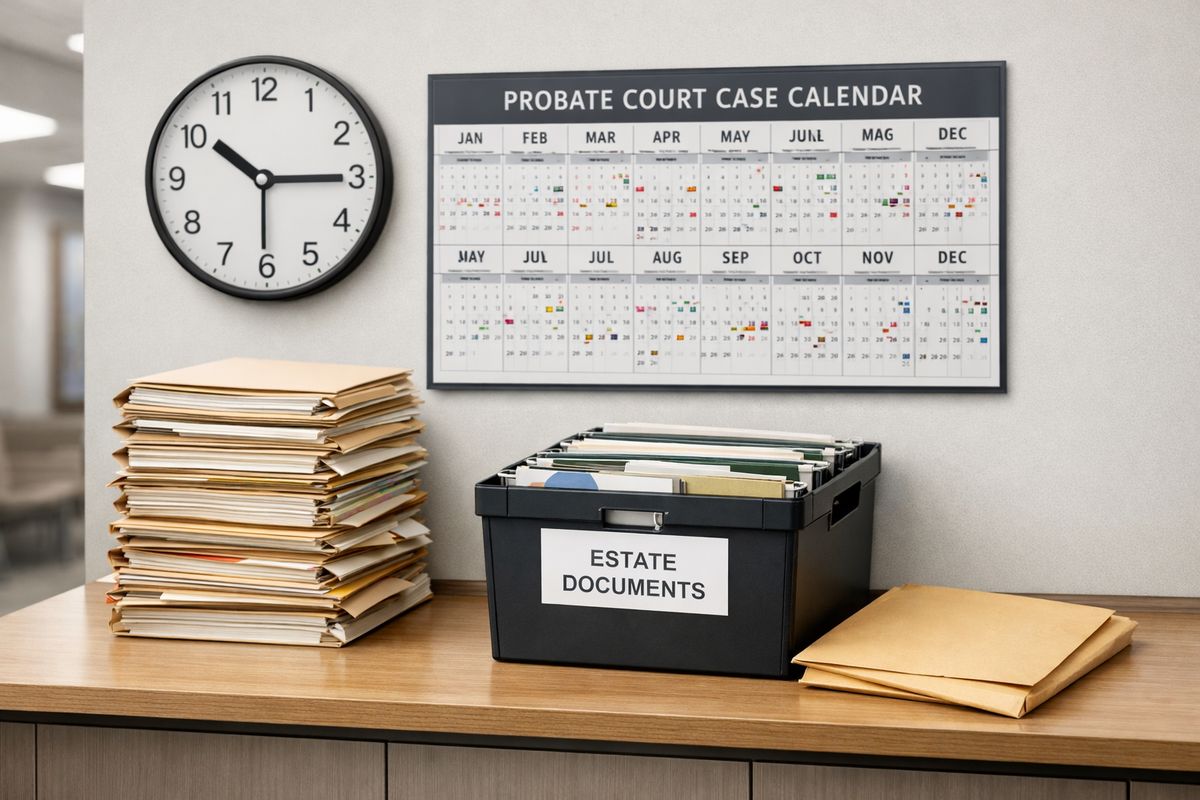
Probate takes time because it moves in stages. Each stage has its own paperwork, deadlines, and waiting periods.
Opening the estate
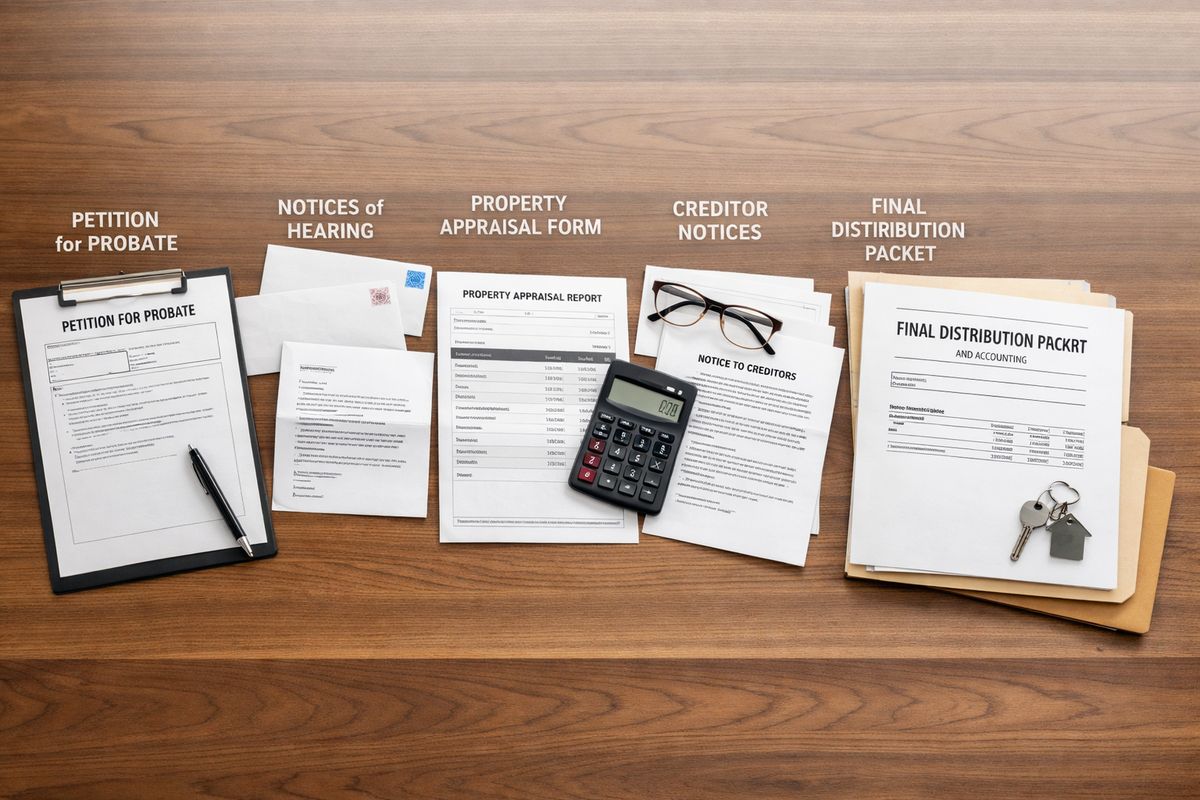
The case begins when a petition for probate is filed with the superior court in the county where the decedent lived. In California, the initial hearing is typically set several weeks out, not a few days out, because the court needs time for notice and scheduling (California Courts).
Notice and court hearing
Before the hearing, notice must be sent to heirs, beneficiaries, and interested persons, and notice generally must also be published in a newspaper of general circulation (California Probate Code §8110). That sounds procedural, and it is, but it shapes the early timeline in a big way. No proper notice, no clean hearing.
Inventory and appraisal period
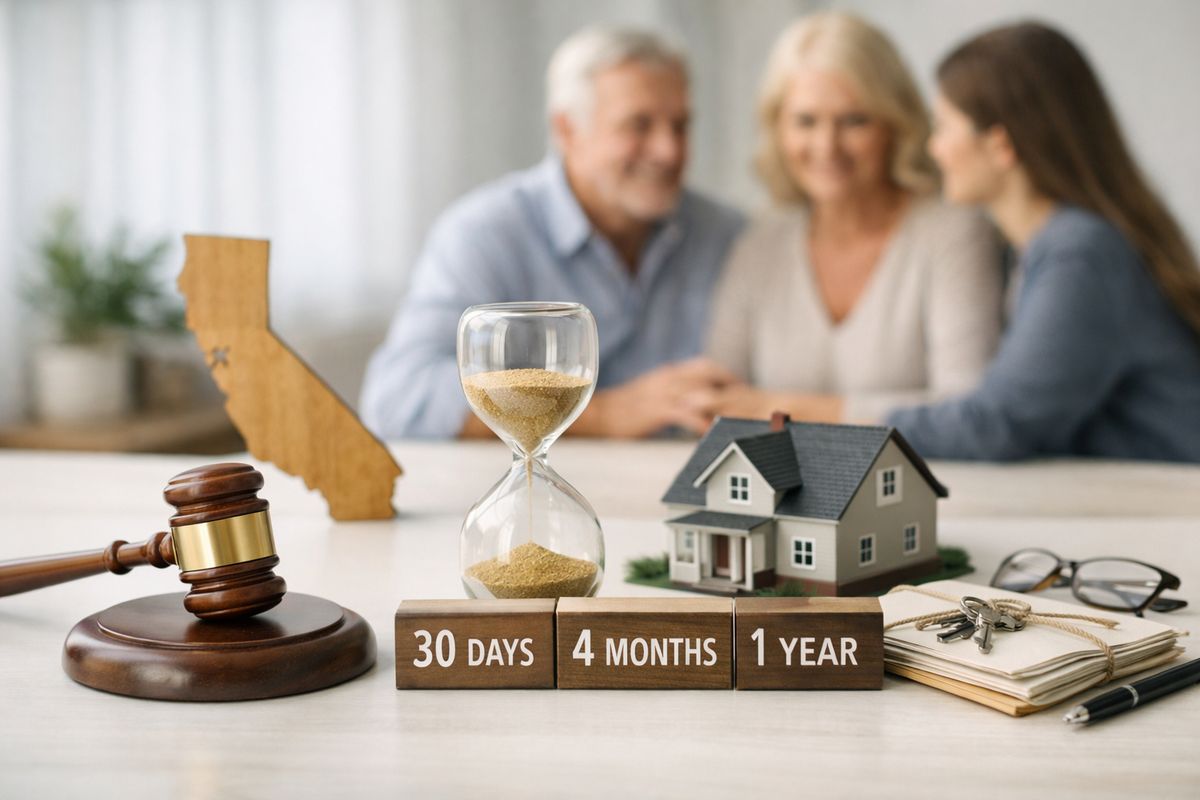
After appointment, the personal representative must identify estate assets and file an Inventory and Appraisal. California requires filing within four months after letters are issued, though appraisals and missing records can make that deadline hard to hit (California Probate Code §8800).
This stage often surprises families. A probate referee may need to value non-cash assets, and that takes time. If the estate includes property and you are also comparing what belongs in a trust versus what stays outside it, this is usually where the difference becomes painfully clear.
Debts taxes and claims
Creditors must be notified, and creditors generally have the later of four months after letters issue or 60 days after notice to file claims (California Probate Code §9100). Until that window closes and valid claims are resolved, final distribution usually cannot happen.
Tax work can add more time. Final income tax returns, fiduciary returns, and property-related issues all slow the middle of the case.
Final accounting and distribution
Closing probate often requires a final report and accounting, a petition for final distribution, another hearing date, and then the actual transfer of property. Even after most of the work is done, the last phase can still take months because court calendars are busy and paperwork must be exact (California Courts).
Court deadlines and waiting periods
Some delays come from complexity. Others are built directly into California law.
Petition to hearing timing
In many counties, the gap between filing the petition and attending the first hearing is often around 30 to 60 days, sometimes longer when calendars are crowded (Superior Court of California, County of San Francisco, Superior Court of California, County of Contra Costa). In busier Bay Area courts, continuances can stretch that front-end timing further.
Creditor claim window
The creditor claim period is one of the biggest fixed delays in probate. Even if everything else is organized, you still have to wait out the statutory window before closing with confidence. That is why probate rarely feels fast.
Inventory filing deadline
California gives the personal representative four months from appointment to file the inventory and appraisal (California Probate Code §8800). Missing account statements, hard-to-value property, or title issues can quickly push this part off schedule.
Factors that change the timeline
A California probate can move like a steady line or like traffic on Highway 80 during a snowstorm. Same route, very different day.
Will versus no will
A valid will usually helps because it names an executor and gives the court a clear starting point. When there is no will, intestate rules control who inherits, and extra steps often follow. If you need the bigger picture on what happens when someone dies without a will, expect more uncertainty and often more time.
Real estate and business interests
Real estate often becomes the pacing item. Homes, rentals, vacation property, and closely held businesses need valuation, management, and sometimes sale approval. If the estate includes a house, it also helps to understand which assets still end up in probate, because title and ownership details matter more than most families expect.
Family conflict and contests
Objections, will contests, and fights over administration can add months or much longer. Once conflict enters the case, the calendar stops looking normal.
Executor responsiveness and records
A responsive personal representative with organized records can save real time. Bank statements, deeds, passwords, tax returns, insurance information, and beneficiary contact details all matter. Paperwork is not glamorous, but it moves the case.
Timeline differences by estate type
Not every estate belongs in the same timing bucket.
Simple estates with few assets
Estates with clear documentation, limited debt, and cooperative beneficiaries often finish closer to the lower end of the 9 to 18 month range. Even then, court rules still apply.
Estates with california real property
A house or parcel of land usually adds work: title review, insurance, upkeep, valuation, and possibly sale logistics. Many California homeowners eventually decide to look at ways to keep a home out of probate later on after seeing how long this part can take.
High value or complex estates
Larger estates often include multiple accounts, business interests, or property in more than one state. More assets usually means more reporting, more coordination, and more room for delay.
Northern california timing realities
Statewide averages are useful, but local court conditions and local property issues can change the feel of the case.
Bay area court scheduling trends
Larger counties often have heavier probate calendars, which can affect hearing dates and continuances. The legal steps may be the same in Santa Clara, Alameda, or San Francisco County, but scheduling pressure is not always the same.
Truckee and tahoe property issues
Second homes and vacation rentals can complicate administration. A cabin near Donner Lake may need winter access, utility management, insurance review, and local service coordination before sale or distribution. Those details are not legal drama, but they still slow things down.
Probate shortcuts and alternatives
Full probate is not the only path in every estate.
Small estate procedures
California offers simplified transfer procedures for certain smaller estates, including affidavit-based options when legal requirements are met (California Courts). When an estate qualifies, the timeline can shrink dramatically compared with full probate.
Living trusts and nonprobate transfers
Assets held in a revocable living trust, or passing by beneficiary designation or joint ownership, usually avoid full probate. That is why so many families compare probate with the practical options for avoiding it, or look more closely at whether a trust actually makes sense for the home and other major assets.
What the numbers mean for you
Here’s the thing: the numbers matter less as predictions and more as guardrails. If you expect probate to take around a year, you are less likely to get blindsided at month six.
Planning for bills and property
During probate, ongoing expenses do not disappear. Mortgage payments, HOA dues, property taxes, insurance, repairs, and basic upkeep all need attention. Planning for that cash flow early can prevent a manageable timeline from turning into a financial mess.
Questions to ask early
Ask how soon the petition can be filed, whether all heirs can be located, whether real estate needs to be sold, whether creditors are known, and whether records are complete. Those simple questions uncover delay points fast.
Frequently asked questions
How long does probate usually take in california?
Most full California probates take about 9 to 18 months, based on court guidance and common practice. Simpler estates may finish sooner, while disputes, real estate, or tax issues can push the process past 18 months.
Can probate finish in less than a year?
Yes, but usually only when the estate is straightforward, the court calendar is moving, and no disputes or appraisal problems come up. Full probate in under a year is possible, just not something you should count on.
What part of probate causes the biggest delay?
The biggest built-in delays are court scheduling, the creditor claim period, and the time needed to prepare the inventory and appraisal. Real estate sales and family conflict are also common reasons a case drags on.
Does having a will avoid probate in california?
No. A will guides the probate process, but it does not avoid probate by itself. Assets still may need court administration unless a valid nonprobate transfer method applies.
Does a living trust make the timeline shorter?
Usually, yes. Properly funded trust assets can pass outside probate, which often saves months of waiting. The catch is that the trust has to be funded correctly, not just signed.
What changes once you see the timeline clearly
Once you understand the California probate timeline, the process feels less like a black box and more like a sequence with known delays. That alone helps you plan better, ask better questions, and avoid false expectations.
Ready to take the next step? Get in touch with Elaine Andrews at The Andrews Law Firm to discuss your needs, request a personalized quote, and explore the best options for your situation. Whether you need an estate plan, a living trust, or guidance through probate, Elaine can help you move forward with confidence.
Contact us today to schedule your consultation.